British Innovation for the Unmanned Battlefield
The modern battlespace is dynamic, complex, and increasingly reliant on information superiority. In this environment, Unmanned Aerial Vehicles (UAVs) have transitioned from niche tools to indispensable assets, offering unparalleled capabilities for reconnaissance, surveillance, and even engagement. However, their true value is unlocked when they are robust, adaptable, and intuitive. This is the philosophy at the heart of UAVTEK, a UK-based company that is redefining what’s possible in unmanned systems for defense and government applications.
UAVTEK isn’t merely assembling off-the-shelf components; they are a sovereign, veteran-owned manufacturer deeply committed to British innovation. From their headquarters in Cheltenham, United Kingdom, they design and build a versatile range of unmanned systems, from agile nano-drones to robust fixed-wing VTOL aircraft. Their unique selling proposition lies in a common control architecture across their entire fleet, offering unparalleled ease of use, reduced training times, and remarkable resistance to the electronic warfare (EW) challenges that define contemporary conflict zones.
A Veteran’s Vision for Battlefield Advantage
Founded in 2016, UAVTEK emerged from a profound understanding of operational needs. The company’s genesis is rooted in the practical demands of military and government users, driven by the vision of CEO and Founder Howard Humphries. This veteran-led approach ensures that every system designed is not just technologically advanced, but also supremely practical, reliable, and user-friendly in the most demanding environments.
The team at UAVTEK recognized a critical gap in the market: while many drone manufacturers focused on commercial applications or niche military platforms, there was a pressing need for a unified, adaptable, and EW-resistant family of unmanned systems. Their commitment to designing and manufacturing their products in the UK, using European components where possible, also underscores their dedication to maintaining sovereign capabilities and ensuring supply chain security for critical defense technologies.

A Unified Ecosystem: The Power of Commonality
One of UAVTEK’s most significant innovations is its airframe-agnostic approach. This means they utilize the same interchangeable ground controllers and the same operating system across their entire fleet of UAVs. This commonality offers immense advantages for military and government users:
- Reduced Training Time: Once an operator is trained on one UAVTEK platform, they can intuitively operate any other system in the fleet. This drastically cuts down on the time and resources required for pilot training and skill retention.
- Enhanced Operational Flexibility: Units can seamlessly switch between different drone types based on mission requirements without needing specialized personnel for each platform.
- Simplified Logistics and Maintenance: A standardized ecosystem means fewer spare parts, streamlined maintenance procedures, and a lower overall logistical footprint.
- Improved Collaboration: Data and control can be easily handed off between different operators and systems, enhancing coordination and situational awareness.
This unified approach allows UAVTEK to offer a comprehensive solution, providing a level of interoperability and ease of integration that is often lacking in a diverse field of unmanned systems.

Resilient in the Face of Adversity: Electronic Warfare Resistance
In today’s conflicts, the electromagnetic spectrum is a battleground. GPS signals are routinely jammed, and traditional radio communications can be disrupted, rendering many conventional drones useless. UAVTEK’s systems are specifically designed to “Fly where others fail.” Their drones feature:
- Proprietary UAVTEK Radio with AES 256 Encryption: This military-grade encryption ensures secure communication links, protecting sensitive data and maintaining control even in contested environments.
- World-Leading Electronic Warfare Resistance: Their systems are engineered to withstand sophisticated jamming attempts, allowing them to continue operations when other drones would be grounded.
- GNSS-Denied Capabilities: Crucially, UAVTEK drones can operate without relying on Global Navigation Satellite Systems (like GPS). This includes “Return to Launch” (RTL) functionality, meaning a drone can autonomously return to its starting point even if GPS signals are completely lost – a critical safety and recovery feature. This capability is likely achieved through advanced onboard navigation systems, potentially incorporating visual odometry, inertial navigation systems (INS), and other sensor fusion techniques.
These features make UAVTEK’s platforms incredibly robust and reliable, providing an invaluable advantage for missions in high-threat environments where electronic warfare is prevalent.
The UAVTEK Fleet: Versatility for Diverse Missions
UAVTEK offers a diverse range of unmanned aerial vehicles, each designed for specific operational needs, but all benefiting from the common control unit and EW resistance:
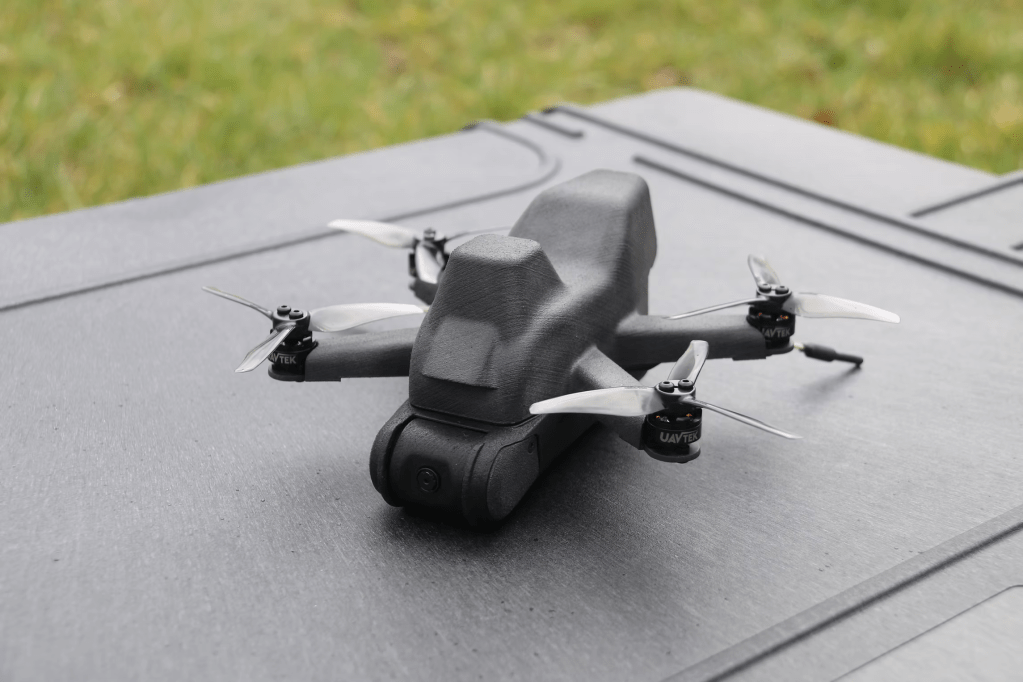
- The Bug Nano UAV Series (Bug, Bug Plus, Ares Micro 1B): These are perhaps UAVTEK’s most recognized systems, developed in collaboration with BAE Systems and initially supplied to the British Army. Weighing as little as 196g (similar to a smartphone), these nano-drones are designed for stealthy, close-range tactical intelligence. They boast:
- Low Visual and Audible Signature: Making them incredibly difficult for adversaries to detect.
- High Wind Resistance: Capable of operating in winds gusting over 50 mph (40 knots), proven in challenging environments like the Arctic.
- Extended Flight Time: Up to 40 minutes with standard arms.
- Tactical ISR (Intelligence, Surveillance, Reconnaissance): Providing beyond visual line of sight (BVLOS) intelligence on what’s “around the corner or over the next hill.”
- Cellular Network and MANET Radio Modules: Enhancing resilience against RF disruption, especially in urban environments.
- Low Risk Profile: Their small mass makes them ideal for use in urban areas with minimal risk to the public.
- The “Ares Micro 1B” in particular offers HD lossless zoom for detailed imagery and extended target standoff.
- Horus Multi-Rotor: Designed for agility, lightweight deployment, and modularity. With interchangeable arms, the Horus can achieve flight missions of up to 29 minutes, speeds up to 80 km/h, and a transmission distance of 7km (5.8Ghz). It offers visual surveillance and situational awareness day or night using digital imagery and video, with footage securely broadcastable to multiple locations. Its low visual and audible signature supports covert operations.
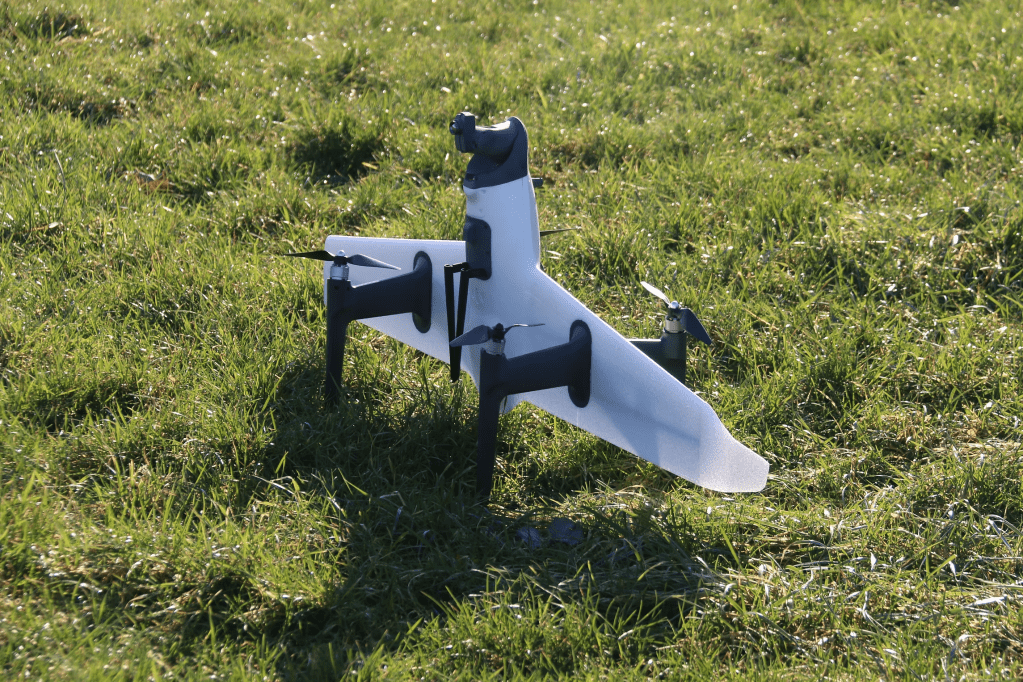
- Babka Fixed Wing VTOL: This is a truly impressive long-range system, demonstrated by its deployment to Ukraine’s Defense Forces via the Ukrainian World Congress. The “Babka” is:
- Extremely Quiet: Designed for covert operations, remaining practically invisible day and night.
- Vertical Take-Off and Landing (VTOL): Eliminating the need for runways, allowing deployment from confined spaces.
- Long Endurance: Missions lasting up to 180 minutes (3 hours).
- Extended Range: Up to 50 km using a sector antenna or up to 300 km with LTE connectivity, significantly enhancing operational reach.
- High-Resolution Cameras: Providing a strategic advantage through superior surveillance.
- Scout Fixed Wing ISR: While details are less prominent on the website, this indicates UAVTEK’s capability in the fixed-wing intelligence, surveillance, and reconnaissance domain, likely for longer-duration and broader area coverage missions.
- Modular Payloads and Custom Projects: UAVTEK’s platforms are highly modular, allowing for custom payloads to be adapted for individual customer requirements. This extends to custom projects like the “Magpie” (Mini 1C UAV Quadcopter), “Hex” (Mini 1C Hexacopter Multi-rotor), and the “Sentinel” (Mini 1C VTOL Fixed Wing), as well as a dedicated Tether System for extended static surveillance.

Strategic Partnerships and Global Reach
UAVTEK’s impact is amplified through strategic collaborations. Their partnership with BAE Systems on the “Bug” nano-drone program is a prime example of a successful SME-major defense contractor collaboration. BAE Systems provided procedural knowledge and mentorship, helping UAVTEK scale their excellent design into a robust military product. This collaboration highlights how agility and innovation from smaller companies can rapidly translate into tangible capabilities for large defense organizations.
Furthermore, UAVTEK has signed a global marketing and distribution agreement with Volatus Aerospace, a significant move that will expand UAVTEK’s footprint globally, particularly in defense and public safety markets. This partnership ensures that UAVTEK can focus on its core strength of designing and building new technologies, while Volatus leverages its global marketing capabilities.
The delivery of UAVTEK’s “Babka” VTOL systems to Ukraine’s Defense Forces through the Ukrainian World Congress’s “Unite with Ukraine” initiative is a powerful testament to the real-world utility and effectiveness of their systems in active conflict zones. This practical deployment and positive feedback from frontline personnel validate UAVTEK’s claims of combat performance and resilience.

C4ISR, AI, and Cybersecurity in the UAVTEK Ecosystem
While UAVTEK’s primary focus is on the unmanned platforms themselves, their systems are inherently designed to integrate into broader defense ecosystems:
- C4ISR Integration: The Common Control Unit (CCU) is modular and features a communications bay that allows for various radio hardware swaps and a removable handset for the main screen. Critically, it has USB ports for offloading data and an RJ45 network port for distributing data feeds across wider networks, such as TAK (Team Awareness Kit). This ensures that the intelligence gathered by UAVTEK drones can be seamlessly incorporated into military command and control systems, enhancing situational awareness for commanders across land, sea, and air domains.
- AI Capabilities: While not explicitly detailed as AI vision like some other companies, UAVTEK’s “auto pilot benefits” and “autonomous mission capability” indicate the integration of sophisticated algorithms. The ability of their drones to operate in GNSS-denied environments and return to launch suggests onboard intelligence for navigation and flight control, reducing the cognitive burden on operators and making the drones easier to control than many mass-produced retail UAVs.
- Cybersecurity: The use of proprietary UAVTEK radio with AES 256 encryption is a direct measure to ensure cybersecurity of the control link and data transmission. The statement that “information captured by these drones is 100% protected – no data is recorded in the drone and because it uses military-grade radio it is less susceptible to electronic warfare” speaks directly to data security and resilience against cyber-attacks or jamming attempts. This focus on data integrity and secure communications is paramount for defense applications.

A Natural Narrative of Practical Innovation
The story of UAVTEK is compelling because it’s grounded in practical military needs and delivered through robust, field-proven technology. It’s a natural narrative for readers interested in defense technology, sparking curiosity about how a company can achieve such significant advancements in drone resilience and user experience. The facts about their veteran leadership, the common control unit, their demonstrated EW resistance, and their direct impact in conflict zones provide a compelling picture of a company truly making a difference.
UAVTEK is not just building drones; they are building tools that empower forces to gain and maintain an information advantage in increasingly complex and contested environments. Their commitment to British innovation, operational commonality, and unwavering resilience ensures they are a vital player in the ongoing evolution of unmanned systems for global defense.