Igniting India’s Private Space Revolution
For decades, the realm of space exploration and launch services was predominantly the domain of national space agencies, large government contracts, and a handful of colossal aerospace companies. The barriers to entry were astronomically high – immense capital, complex technological expertise, and the sheer challenge of defying gravity. Yet, in the bustling city of Hyderabad, India, a quiet revolution began brewing in 2018, spearheaded by a startup with audacious dreams: Skyroot Aerospace.
Founded by two former Indian Space Research Organisation (ISRO) scientists, Pawan Kumar Chandana and Naga Bharath Daka, Skyroot Aerospace was born from a shared vision: to democratize access to space, making it affordable, reliable, and on-demand. They understood the burgeoning demand for launching small and medium-sized satellites – for telecommunications, earth observation, scientific research, and increasingly, for defense and intelligence applications. Their mission was clear: to build a new generation of launch vehicles that could cater to this rapidly expanding global market, while simultaneously positioning India at the forefront of the private space race.
The Genesis: From ISRO Dreams to Entrepreneurial Leaps
Pawan Kumar Chandana and Naga Bharath Daka were integral parts of ISRO, India’s venerable space agency, which boasts a storied history of remarkable achievements, including successful Mars and Moon missions. Their time at ISRO provided them with invaluable insights into rocket science, propulsion systems, and the intricate dance of orbital mechanics. However, they also observed the inherent limitations of a government-run agency, particularly in terms of agility and the speed of innovation often seen in the commercial sector.
The liberalization of India’s space policy, with a growing emphasis on private participation, provided the fertile ground for their entrepreneurial aspirations to take root. They envisioned a company that could harness the spirit of innovation, the cost-effectiveness, and the rapid development cycles often associated with startups, applying it to the highly complex and capital-intensive domain of rocketry. This was a bold leap, moving from the secure environment of a national agency to the high-stakes world of private space ventures.
Skyroot Aerospace was officially incorporated on June 11, 2018. Starting from a modest office in Kondapur, with a small but dedicated team, they embarked on their ambitious journey. Their initial focus was on developing launch vehicles tailored for small satellite markets, which were experiencing exponential growth globally. The core philosophy was rooted in “opening space for all,” a mantra that guided their technological choices and business strategy.

Building the Vikram Series: A Tribute to a Visionary
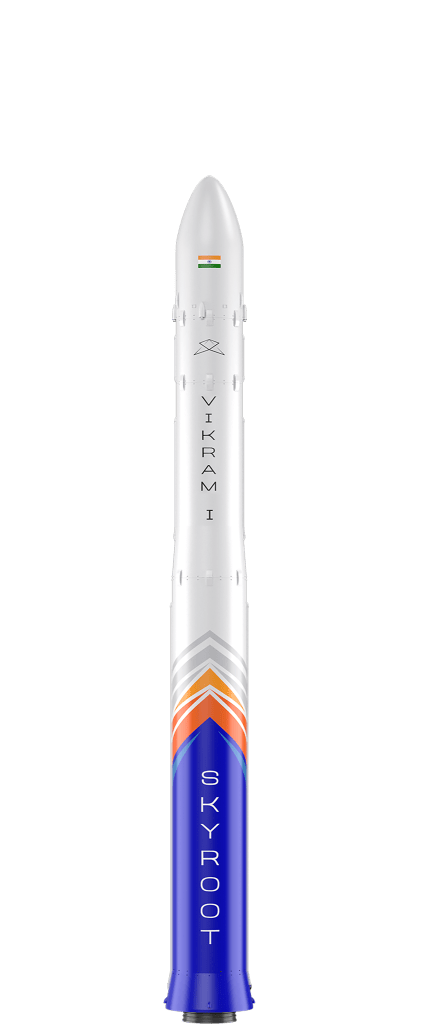
Skyroot’s flagship family of launch vehicles is named “Vikram,” a fitting tribute to Dr. Vikram Sarabhai, the revered father of India’s space program. This naming convention underscores their deep respect for India’s space heritage while signaling their intent to carry forward his legacy into the commercial era. The Vikram series is designed to be modular and cost-effective, leveraging advanced manufacturing techniques and materials to achieve optimal performance.
The Vikram series comprises three planned vehicles:
- Vikram-I: Designed to carry payloads up to 480 kg to a 500 km low-inclination orbit. This is positioned as their maiden orbital-class launch vehicle.
- Vikram-II: Capable of launching heavier payloads, approximately 595 kg.
- Vikram-III: The most powerful in the series, intended to carry payloads up to 815 kg.
A key differentiator for Skyroot’s rockets is their emphasis on rapid launch capabilities. The company aims to reduce the time required for rocket preparation from months to mere days, providing an unparalleled level of responsiveness for clients who need timely access to space. This is achieved through modular design, simplified ground operations, and the integration of cutting-edge technologies.

Technological Innovations: Beyond the Blueprint
Skyroot Aerospace is not merely assembling rockets; they are innovating at the component level. One of their notable technological advancements is the development of a proprietary 3D-printed cryogenic engine, dubbed “Dhawan-I.” This engine, named after ISRO’s former chairman Satish Dhawan, showcases their ability to leverage additive manufacturing for complex and high-performance components. 3D printing allows for intricate designs, reduced part count, and faster manufacturing times, ultimately leading to lighter and more efficient rockets and lower production costs.
They also utilize advanced carbon composites in the rocket’s structure, which significantly reduces the overall weight of the vehicle. A lighter rocket means a greater payload capacity or more efficient fuel consumption, both of which translate into cost savings for clients.
A Historic Launch: Vikram-S and Mission “Prarambh”
The journey of any aerospace startup is punctuated by milestones, and for Skyroot, a pivotal moment arrived on November 18, 2022. On this historic day, Skyroot Aerospace successfully launched its suborbital rocket, Vikram-S, under a mission aptly named “Prarambh” (meaning “The Beginning”). Launched from ISRO’s Satish Dhawan Space Centre in Sriharikota, Andhra Pradesh, Vikram-S soared to an altitude of 89.5 km, marking India’s first-ever rocket launch by a private company.
This suborbital mission was more than just a flight; it was a crucial technology demonstrator. It validated several key technologies that would be incorporated into the orbital-class Vikram-I. The successful launch demonstrated Skyroot’s engineering prowess, their ability to execute complex operations, and their adherence to stringent safety and performance standards. The event garnered widespread national and international attention, with Indian Prime Minister Narendra Modi commending the achievement as a “historic moment for India” and a “significant step forward for the private sector in the global space industry.” The launch was executed with the full backing and support of ISRO and the Indian government’s IN-SPACe program, an entity created to promote, enable, and regulate private sector participation in space activities.
Funding the Future: Securing the Capital for Cosmic Ambitions
Building rockets is an incredibly capital-intensive endeavor. From sophisticated design software to advanced manufacturing facilities and rigorous testing equipment, the financial requirements are substantial. Skyroot Aerospace has demonstrated a remarkable ability to attract significant investment, reflecting investor confidence in their vision, technology, and execution capabilities.
Since its founding, Skyroot has secured substantial funding through multiple rounds. Notable investors include Singapore’s sovereign fund GIC, Temasek, Mukesh Bansal, and various venture capital firms like Sherpalo Ventures, Graph Ventures, and Meraki Labs. By October 2023, Skyroot had raised a total funding of over $95 million across seven rounds, solidifying its financial runway for ongoing development and future launches. This impressive fundraising journey underscores the growing appetite among investors for the burgeoning Indian private space sector.
Collaborations and Strategic Partnerships: Expanding Horizons
Skyroot Aerospace understands that collaboration is key to accelerating progress in the space industry. They have actively pursued partnerships that leverage complementary strengths and open new avenues for growth.
A significant development in mid-2025 (June 25, 2025) saw Skyroot Aerospace ink a Memorandum of Understanding (MoU) with Axiom Space, a leading U.S. company focused on building a commercial space station and conducting human spaceflight missions. This partnership is designed to explore collaboration opportunities to advance space exploration and enhance access to Low Earth Orbit (LEO).
Specifically, the MoU suggests that Axiom Space will explore utilizing Skyroot’s capabilities for:
- Groundbreaking research payloads.
- Orbital data center nodes.
- Other missions to Axiom Station and independently in LEO.
This strategic alliance is particularly noteworthy as it coincides with India’s return to human spaceflight on the International Space Station (ISS) via Axiom Mission 4 (Ax-4), featuring an Indian astronaut. The partnership signifies a deepening cooperation between the Indian and U.S. space sectors and holds the promise of integrated launch and orbital solutions that could shape humanity’s future in space. It could potentially reduce costs and accelerate timelines for universities, startups, and national agencies seeking microgravity research time in LEO.
Beyond Axiom Space, Skyroot continues to foster strong ties with ISRO, benefiting from their guidance, expertise, and access to testing facilities. This symbiotic relationship between a private startup and the national space agency is a model for rapid development and innovation within India’s burgeoning space ecosystem.
The Road Ahead: Orbital Ambitions and Global Footprint
With the success of Vikram-S and robust financial backing, Skyroot Aerospace is now firmly focused on the maiden orbital launch of Vikram-I. This will be a momentous achievement, transitioning them from a suborbital flight demonstrator to a full-fledged orbital launch service provider. The ability to place satellites into orbit reliably and affordably is the cornerstone of their business model and their pathway to becoming a significant player in the global space market.
Looking further ahead, Skyroot has ambitious plans for manufacturing and testing. They have signed an MoU with the Telangana government to establish an integrated, private rocket manufacturing, integration, and testing facility in the state. This project, with an investment of approximately ₹500 crore (around $60 million USD), will be one of the largest integrated private-sector rocket facilities in India. This investment signifies their commitment to scaling up production and further solidifying their capabilities.
Skyroot’s vision extends beyond launching rockets. They aim to be a comprehensive space solutions provider, contributing to a vibrant space economy. Their work has profound implications not only for commercial satellite operators but also for the defense sector, which increasingly relies on timely, secure, and resilient access to space for intelligence, surveillance, reconnaissance, and communication. The ability to launch dedicated missions with enhanced security and responsiveness will be a valuable asset for national security applications.
The story of Skyroot Aerospace is a compelling narrative of how vision, technological prowess, and entrepreneurial spirit can transform a nation’s capabilities. From a bold idea conceived by two former ISRO scientists to a trailblazing company making history, Skyroot is not just building rockets; it is building the future of India’s private space industry, one launch at a time, and opening up new frontiers for commercial and defense applications alike.