Forging the Future of Autonomous Defense
In the rapidly evolving landscape of defense technology, a new breed of companies is emerging, driven by audacious visions and cutting-edge innovation. Among them, Shield AI stands as a prominent pioneer, fundamentally reshaping how militaries operate and protect their personnel through the power of artificial intelligence. Their journey, rooted in a profound commitment to safeguarding lives, reveals a compelling story of relentless development, strategic partnerships, and a clear-eyed focus on real-world impact.
The Genesis: A Vision Born from Experience
The story of Shield AI begins with a deeply personal motivation. Founded in 2015 by brothers Brandon Tseng, a former Navy SEAL officer, and Ryan Tseng, along with Andrew Reiter, the company’s inception was a direct response to a stark reality witnessed in combat zones. Brandon Tseng, having served in Afghanistan, recognized firsthand the critical need for advanced reconnaissance and autonomous systems to reduce risks to service members. As reported by Wikipedia, a particularly poignant experience in Afghanistan’s Uruzgan province, where his unit suffered casualties due to insufficient reconnaissance of a hostile building, solidified this conviction.
This powerful insight became the bedrock of Shield AI’s mission: to protect service members and civilians with intelligent, autonomous systems. In an ecosystem where defense technology startups were a rarity, the Tseng brothers, along with Reiter, embarked on their ambitious journey with a modest seed fund of $100,000, pooled from friends and family. This early, foundational decision to prioritize their mission above all else, even when faced with investor skepticism, set the stage for their future trajectory, as highlighted in their “Ten Years of Shield AI” announcement on their website.
Hivemind: The Brain of Autonomous Systems
At the heart of Shield AI’s innovation lies Hivemind, their flagship autonomy software. This advanced AI pilot is designed to enable unmanned systems to operate autonomously in complex, dynamic, and often GPS- or communication-denied environments. Hivemind is more than just an autopilot; it’s a sophisticated brain that allows platforms to perceive, reason, and adapt, much like a human pilot, but with the speed and precision of artificial intelligence.
The development of Hivemind has been a testament to Shield AI’s dedication to pushing the boundaries of what’s possible in autonomous flight. It has been integrated into a diverse range of aircraft, from small quadcopters to F-16 fighter jets, showcasing its versatility and robustness. A key milestone in this journey was Hivemind’s ability to fly F-16s, execute advanced dogfighting maneuvers, and lead multi-ship combat formations alongside human pilots, as detailed on Shield AI’s website. This groundbreaking achievement is not merely a technical feat; it redefines how militaries approach air dominance and the integration of AI into aerial combat.
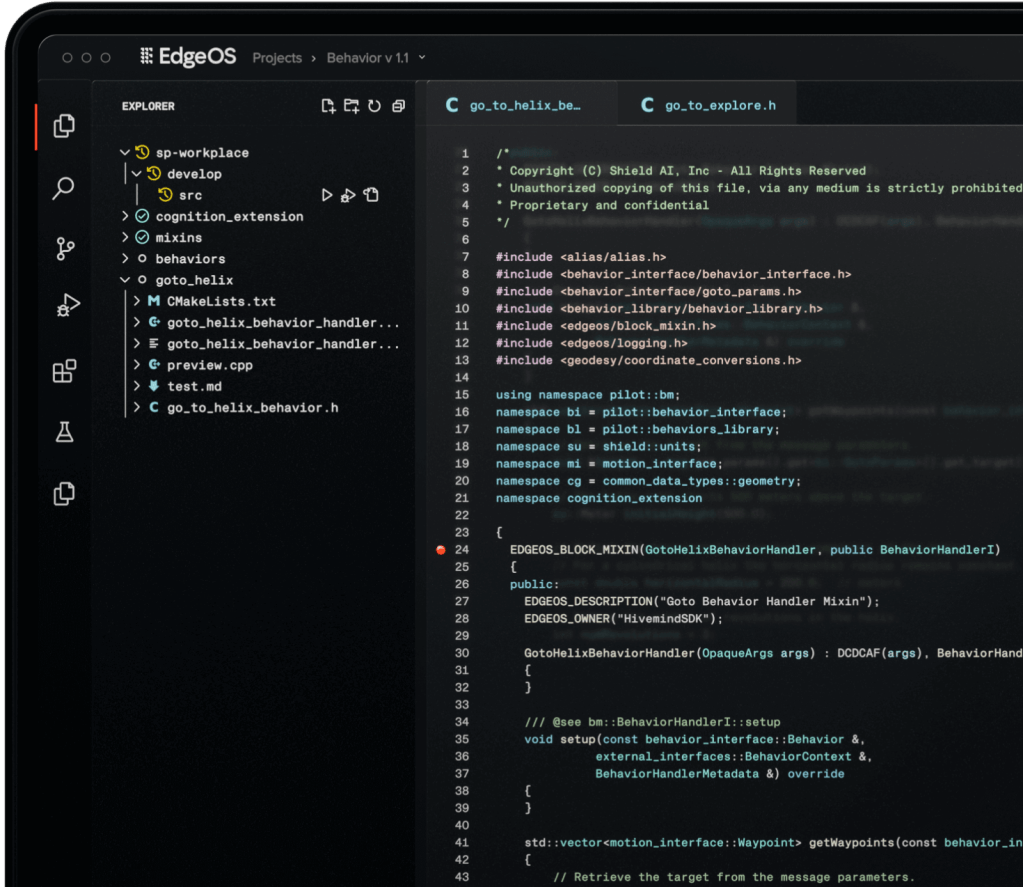
Shield AI has also focused on making these capabilities accessible to a wider audience through Hivemind Enterprise. This suite of tools, battle-tested and platform-agnostic, empowers engineers working in aerospace and autonomy to accelerate their development, potentially achieving ten times the output in a fraction of the time, as noted on their website. This emphasizes their vision of supercharging the broader industrial base to develop and deploy autonomy.
A Growing Product Portfolio

Beyond Hivemind, Shield AI has developed a portfolio of products designed to address critical needs in defense:
- V-BAT: Through their acquisition of Martin UAV, Shield AI now offers the V-BAT, an AI-powered vertical takeoff and landing (VTOL) aircraft. The V-BAT is designed for a range of intelligence, surveillance, and reconnaissance (ISR) and targeting missions, particularly in environments where GPS and communications are compromised. The Defense Post, in an article from April 8, 2025, highlighted the upgraded V-BAT’s features, including a heavy fuel engine for extended endurance and fully autonomous VTOL capability, eliminating the need for human intervention in takeoff or landing. Its compact design and ability to operate without runways or complex recovery systems make it ideal for maritime and expeditionary forces, with deployments on various U.S. Navy ships and Marine Expeditionary Units. The article also mentioned its adoption by international partners like the Romanian Navy, Japan Maritime Self-Defense Force, and Indian Armed Forces.
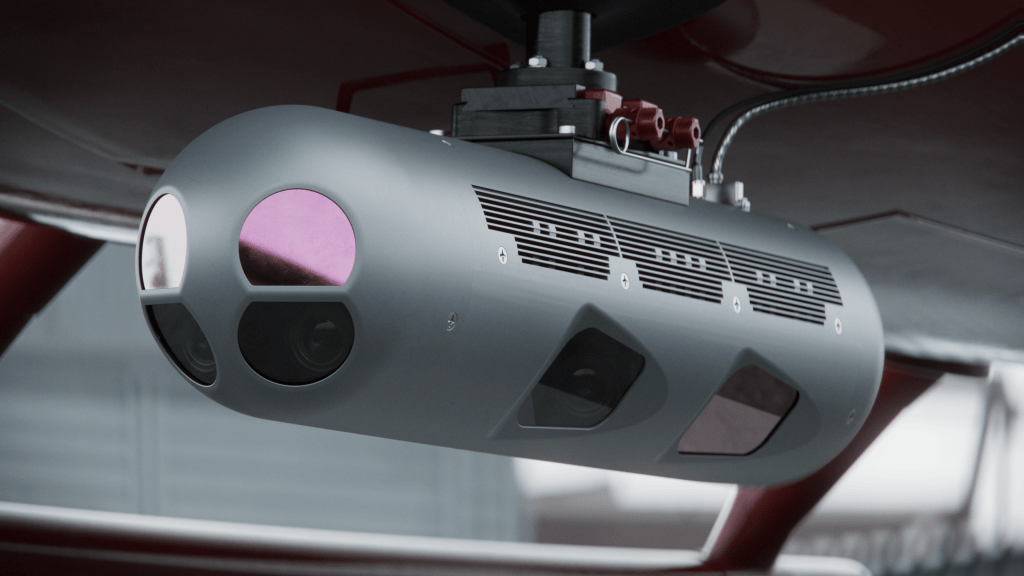
- ViDAR: Another key product is ViDAR (Visual Detection and Ranging), a wide-area maritime search system. Acquired through Sentient Vision Systems, ViDAR uses AI-powered software to provide unrivaled surveillance capabilities, day or night, across air, land, and sea. OODAloop reported on June 6, 2025, about the successful ViDAR pod trials with the Australian Army, showcasing its effectiveness in passive wide-area search operations using multi-electro optic and infrared cameras.
- Tracker: This AI-powered software enhances object detection in videos, providing superior situational awareness for operators.
These products are not just standalone systems; they are often designed to integrate seamlessly with Hivemind, allowing for enhanced autonomy and decision-making capabilities.
Strategic Partnerships and Global Reach
Shield AI’s growth has been fueled not only by its technological prowess but also by a series of strategic partnerships. These collaborations are crucial for accelerating the deployment of their AI-enabled solutions and expanding their reach across the globe.
- L3Harris Technologies: A significant partnership with L3Harris Technologies was announced on February 26, 2025. This collaboration focuses on integrating Hivemind with L3Harris’s Distributed Spectrum Collaboration and Operations (DiSCO) to enable AI-enabled unmanned systems to sense, adapt, and act in electronic warfare operations. This aims to create more agile and responsive solutions for complex, multi-domain battlefields, as detailed in the L3Harris press release.
- Booz Allen Hamilton: On March 18, 2025, Shield AI partnered with Booz Allen Hamilton to deliver new AI-enabled, software-defined autonomous solutions for the U.S. government. This collaboration combines Booz Allen’s mission engineering expertise with Shield AI’s Hivemind Enterprise platform, initially focusing on the Department of Defense. This aims to accelerate the development and integration of advanced AI control systems into a wide variety of uncrewed systems, enhancing decision advantage for the U.S. military, according to a Shield AI press release.
- Airbus U.S. Space & Defense: A teaming agreement with Airbus U.S. Space & Defense was announced on April 30, 2025, to integrate Hivemind autonomy software onto the Airbus MQ-72C Logistics Connector, an unmanned variant of the UH-72 Lakota. This collaboration aims to expand the platform’s mission capabilities for logistics and operational scenarios, including the U.S. Marine Corps’ Aerial Logistics Connector program, as highlighted in the Airbus U.S. press release.
- Korea Aerospace Industries (KAI): Shield AI is also collaborating with KAI to advance AI pilots, integral to KAI’s efforts in enhancing manned/uncrewed teaming operations. This alliance, reported by Air Force Technology on March 24, 2025, will leverage Hivemind Enterprise to accelerate KAI’s AI pilot technology development.
These partnerships underscore a broader trend: the defense industry is increasingly recognizing the imperative of integrating advanced AI and autonomy to address modern threats and maintain a strategic edge.
Funding and Valuation: A Trajectory of Growth
Shield AI’s innovative approach has attracted substantial investment, reflecting growing confidence in its technology and market position. Shield AI has raised a total of $1.17 billion over 16 funding rounds. A notable Series F round in September 2023, led by the U.S. Innovative Technology Fund, raised $281 million at a $2.7 billion valuation. More recently, on March 6, 2025, Shield AI completed another F-1 strategic funding round, raising $240 million and bringing its valuation to $5.3 billion, with significant participation from L3Harris and Hanwha Asset Management, as reported by Inside Unmanned Systems. This robust funding enables Shield AI to continue its aggressive development and deployment of cutting-edge defense technologies.
The Future: Autonomy for a Safer World
Shield AI’s vision extends beyond simply building advanced drones; it’s about fundamentally transforming warfare to protect human lives. Their unwavering commitment to “autonomy for the world” and the belief that “the greatest victory requires no war” highlights a philosophy aimed at deterrence and reduced risk through superior intelligent systems.
As the defense landscape continues to evolve, characterized by increasingly sophisticated threats and the imperative for rapid, informed decision-making, companies like Shield AI are at the forefront of driving critical change. Their focus on AI in defense, unmanned systems, and intelligent C4ISR capabilities positions them as a key player in shaping the future of global security. The journey of Shield AI, from a personal inspiration to a multi-billion-dollar enterprise, offers a compelling narrative of innovation, resilience, and a profound dedication to a mission that seeks to make the world a safer place through intelligent autonomy.