Steering the Future of Uncrewed Maritime Operations
In the vast expanse of the world’s oceans, a quiet revolution is underway, driven by the emergence of uncrewed surface vessels (USVs). At the vanguard of this transformation is SEA-KIT International, a British company that has rapidly become a global leader in designing, building, and operating advanced USVs. From its base in Tollesbury, Essex, SEA-KIT is delivering innovative solutions that promise to enhance safety, reduce costs, and significantly lower the carbon footprint of maritime operations across diverse sectors, including commercial hydrography, environmental monitoring, and crucial defense and security applications.
From Sailing Vision to XPRIZE Triumph
SEA-KIT International was founded in 2017 by Ben Simpson, a seasoned maritime professional with a background as a superyacht captain and engineer. His earlier venture, Hush Craft, established in 2015, laid the groundwork for the development of the trans-ocean capable USVs that would eventually form the SEA-KIT brand. Simpson’s vision was to harness autonomous technology to address critical challenges in the maritime industry, particularly the high cost and environmental impact of traditional crewed vessel operations, while also improving safety by removing personnel from hazardous environments.
A pivotal moment in SEA-KIT’s journey was its participation in the Shell Ocean Discovery XPRIZE. This global competition challenged teams to develop innovative robotic solutions for rapid, unmanned deep-sea exploration and mapping. SEA-KIT’s entry, developed in collaboration with the GEBCO-Nippon Foundation Alumni Team, utilized their first X-Class USV, Maxlimer, alongside a Kongsberg Maritime HUGIN Autonomous Underwater Vehicle (AUV) system. In 2019, the team emerged victorious, winning the grand prize. This triumph, as highlighted by reports, solidified SEA-KIT’s reputation as a pioneer in ocean-capable USV technology, demonstrating the ability to map vast areas of the seafloor with high resolution, autonomously and efficiently.
Following this success, Maxlimer achieved another significant milestone: in 2019, it completed the world’s first autonomous commercial crossing of the North Sea, safely delivering a cargo of oysters from the UK to Belgium, navigating through some of the busiest shipping lanes. These early accomplishments underscored the practical viability and commercial potential of SEA-KIT’s USV technology.
In a significant development, SEA-KIT International became an operating subsidiary of Fugro, a global leader in geo-data, after Fugro acquired the remaining shares in SEA-KIT in late 2023. This acquisition deepens a long-standing collaboration between the two companies, leveraging Fugro’s global network and expertise to further scale SEA-KIT’s autonomous offerings. Following the acquisition, Doug Graham, a maritime robotics expert, took over as CEO from founder Ben Simpson.
The USV Fleet: Designed for Over-the-Horizon Performance
SEA-KIT’s core strength lies in its range of Uncrewed Surface Vessels (USVs), designed for robust performance, extended endurance, and over-the-horizon operation. These vessels are built to stringent maritime standards and are capable of deploying a wide array of sensors and other unmanned vehicles. Key features and vessel classes include:
X-Class USV (e.g., Maxlimer, Fugro Blue Essence): This 12-meter (approx. 39 ft) vessel is the foundation of SEA-KIT’s fleet. It is a highly versatile and configurable “mother-ship” platform capable of launching and recovering various remote vehicles, including large AUVs or Remotely Operated Vehicles (ROVs). As described by SEA-KIT and other maritime publications, the X-Class is designed for deep-water bathymetry, offshore and subsea asset inspection, ocean science, and hydrographic survey missions. Its substantial payload capacity, long range, and proven over-the-horizon endurance mean it can undertake multiple missions independently or as part of a larger fleet. The Fugro Blue Essence, an X-Class USV, notably received the first Unmanned Marine Systems (UMS) certificate from Lloyd’s Register in 2021, and also achieved Category 0 approval from the UK Maritime and Coastguard Agency in 2024, allowing for unrestricted remote operations.
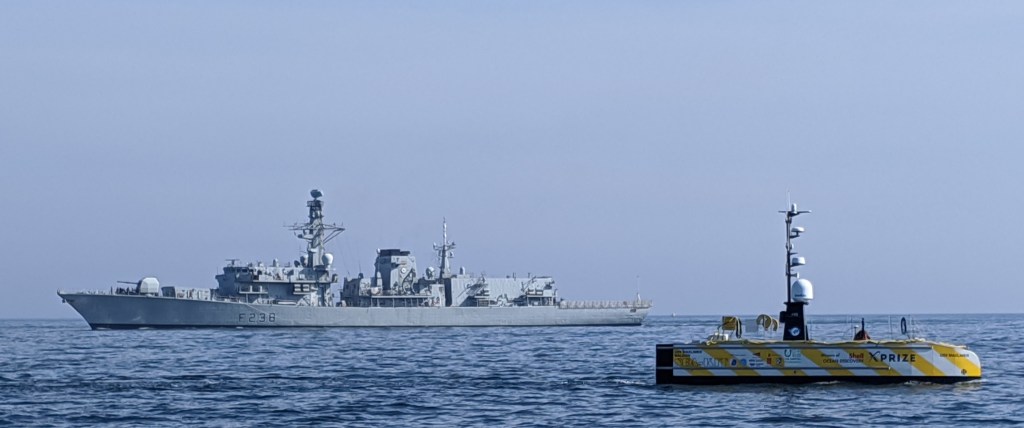
H-Class USV: This class offers increased power, seakeeping capabilities, and fuel capacity compared to the X-Class. It features a composite hull for reduced weight, leading to fuel savings and enhanced endurance. The H-Class is designed with active stabilizers to minimize roll, improving data collection quality. Its retractable gondola can accommodate a variety of sensors, such as single/multibeam echo sounders or sub-bottom profilers, making it suitable for deep-water and nearshore bathymetric and hydrographic survey missions.
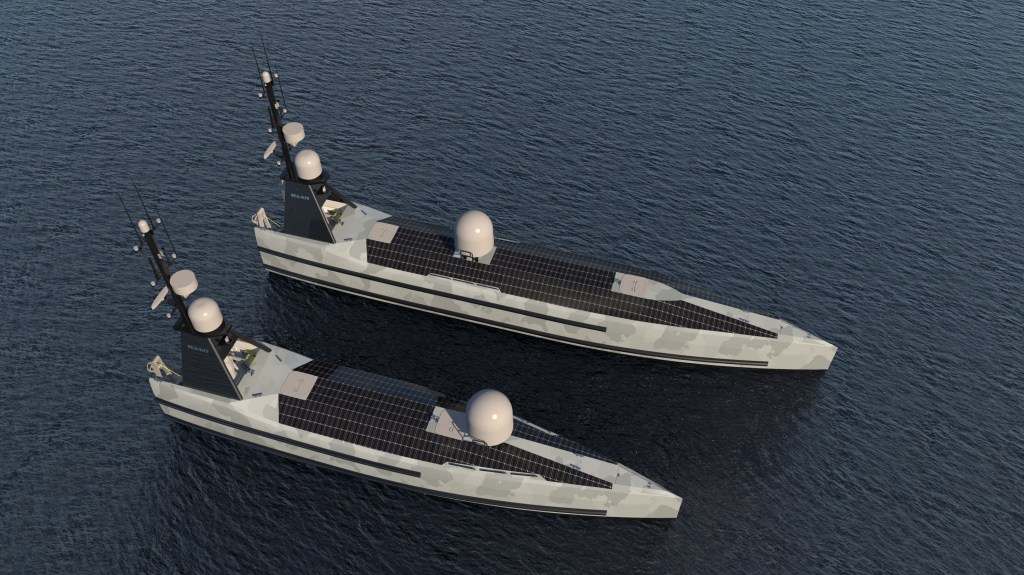
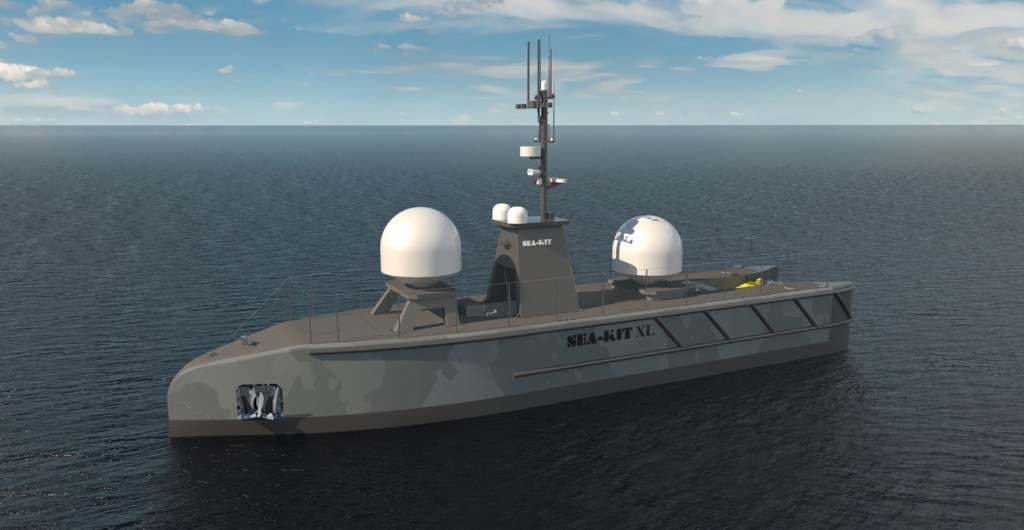
XL-Class USV: The 18-meter (approx. 59 ft) XL-Class is a robust and versatile platform designed for long-range operations, even in heavy seas. With a substantial payload capacity of up to 7 tonnes, it is suitable for towing seismic cables and larger sensors. This class is capable of launching and recovering a wide range of vehicles and payloads, further extending its multi-tasking capabilities. The XL-Class also incorporates fully redundant station-holding capabilities and a large lithium UPS supply for ship systems, making it a high-endurance standalone asset or a strong force multiplier in a fleet.
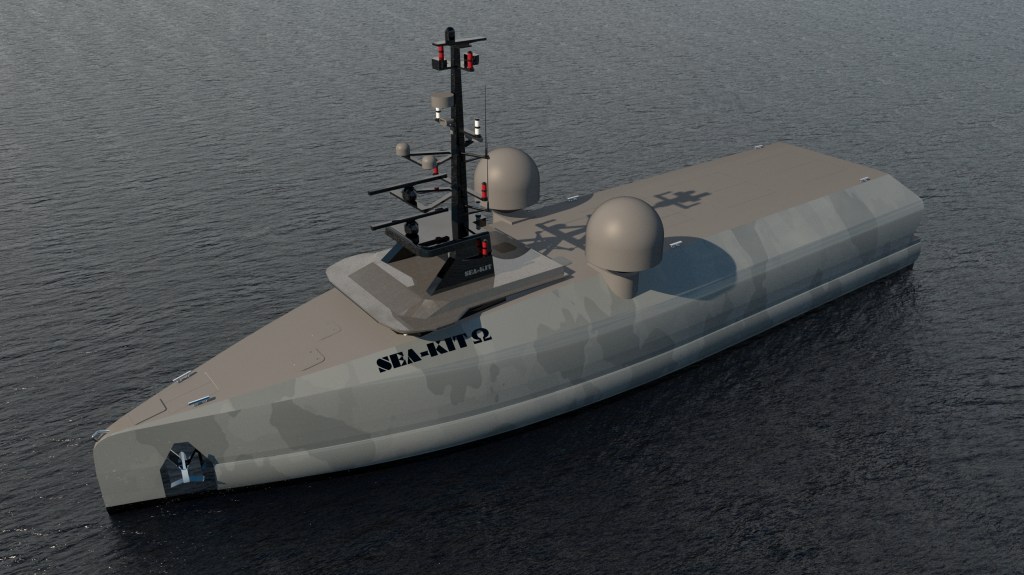
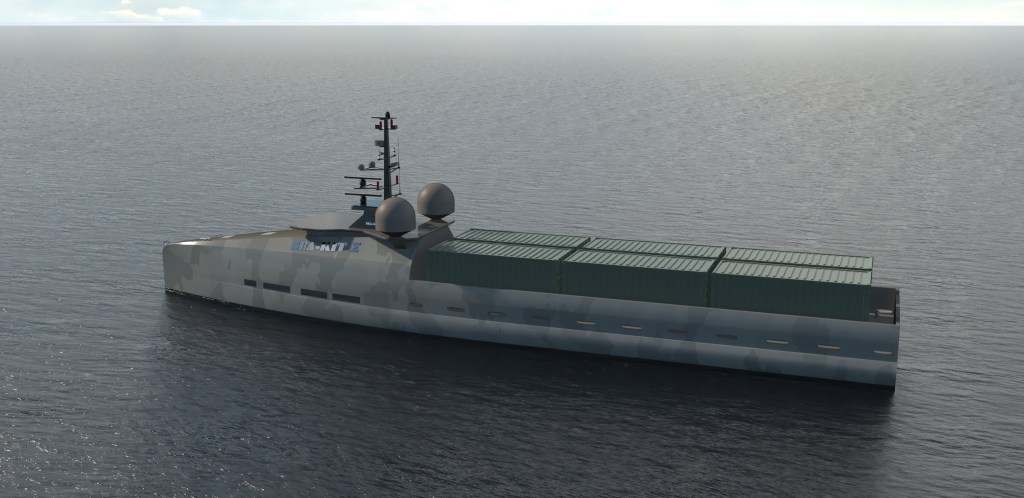
Omega (Ω) and Sigma (Σ) Class USVs: These are larger, next-generation vessels designed for even longer endurance and more complex fully uncrewed maritime operations. The Omega class can launch, retrieve, and control underwater, on-surface, and aerial vehicles and sensors, including ROVs and AUVs, to meet future naval and maritime security requirements. The Sigma (36-meter) class represents the largest and most capable USV in their envisioned lineup, offering massive payload capacity and enhanced capabilities for diverse missions.
G-SAVI Control System: The Brains Behind the Autonomy
Central to the operation of all SEA-KIT USVs is their proprietary G-SAVI control and surveillance platform. This advanced vessel control system allows for safe, secure, and remote operation of the USVs from land-based control centers. It leverages the latest technological advancements to enhance the vessels’ capabilities, integrating new autopilot and drive modules.
G-SAVI is designed to communicate natively with all onboard and remote systems using advanced communication protocols. It rapidly processes vast amounts of data onboard, optimizing performance, monitoring trends, and even preempting potential operational and navigational issues, which it then alerts the remote operator to. By utilizing edge-based computing onboard, reliance on external communication is reduced, ensuring real-time decision-making and operation even in remote or communication-restricted areas. This translates to faster response times and longer mission endurance.
Applications Across Diverse Maritime Sectors
SEA-KIT’s USVs offer transformative potential across a broad spectrum of applications:
- Commercial Hydrography and Ocean Science: USVs are revolutionizing seabed mapping and oceanographic data collection. They provide a cost-effective and environmentally friendly alternative to traditional crewed survey vessels, enabling faster data acquisition, extended endurance, and access to challenging or remote areas. SEA-KIT is a partner of the Nippon Foundation-GEBCO Seabed 2030 Project, contributing its USV technology to the global effort to map the entire ocean floor by 2030. Maxlimer was instrumental in the Tonga Eruption Seabed Mapping Project, safely surveying the caldera of an underwater volcano from 16,000km away.
- Offshore Energy: For the oil & gas and rapidly expanding offshore wind industries, USVs provide efficient and safer methods for inspecting subsea infrastructure, pipelines, and wind farm assets, reducing costs and risks associated with human presence. SEA-KIT has already achieved the world’s first fully remote inspection of offshore wind farm assets using an integrated USV and ROV solution.
- Environmental Management: By replacing larger, crewed vessels, SEA-KIT USVs significantly reduce carbon emissions (up to 95% less CO2, according to reports) and minimize acoustic pollution, contributing to more sustainable offshore operations and environmental monitoring efforts. The company is actively involved in projects like ZEPHR (Zero Emissions Ports Hydrogen Refuelling), designing a hydrogen-powered, zero-emission USV to accelerate maritime decarbonization.
- Defense and Security: This is a critical growth area for SEA-KIT. Their USVs offer a safer, lower-cost, and environmentally conscious solution for military, defense, and security sectors.
- Maritime Domain Awareness (MDA): USVs provide persistent and discreet surveillance for coastal areas, ports, and critical offshore assets, enhancing situational awareness and detecting unauthorized activities.
- Intelligence, Surveillance, and Reconnaissance (ISR): Equipped with various sensors, SEA-KIT USVs can perform long-endurance ISR missions, gathering vital information without placing personnel in harm’s way.
- Mine Countermeasures (MCM): The ability to launch and recover AUVs and ROVs from their USVs makes them ideal platforms for mine detection and neutralization, a highly dangerous task for crewed vessels.
- Anti-Submarine Warfare (ASW): USVs can be equipped with various sensors for ASW operations, serving as force multipliers in complex naval scenarios.
- Force Protection: USVs can create a protective perimeter around high-value assets or naval formations.
- Logistics Support: Their cargo carrying capacity could also be utilized for discreet resupply or transfer of critical equipment in certain operational contexts.
- By removing military and security personnel from hazardous areas, SEA-KIT USVs significantly reduce operational risk while offering cost-effective and adaptable solutions for numerous mission types.
Commitment to Innovation and Sustainability
SEA-KIT’s trajectory is characterized by continuous innovation and a strong commitment to sustainability. They have consistently pushed the boundaries of USV technology, evident in their multiple awards for innovation and their pioneering efforts in achieving industry-first certifications. Their focus on hybrid propulsion systems, which deliver long endurance with minimal acoustic signature and reduced CO2 footprint, aligns with global efforts towards decarbonizing the maritime industry.
The company is not merely building vessels; it is cultivating an ecosystem of autonomous maritime solutions. By investing in proprietary control systems, pushing for regulatory advancements, and forming strategic partnerships, SEA-KIT International is playing a crucial role in shaping the future of uncrewed operations at sea, delivering safer, more efficient, and more sustainable capabilities for the blue economy and global security.