Revolutionizing Military Training and Simulation with AI-Powered 3D Reality
In the critical domain of military preparedness, effective training and simulation are paramount, yet traditionally plagued by high costs, lengthy development cycles, and limited accessibility. Schemata, a San Francisco-based AI company that emerged from stealth in May 2025, is fundamentally transforming this landscape. By leveraging cutting-edge 3D reality capture, spatial AI, and generative AI capabilities, Schemata automatically converts real-world environments into photorealistic, interactive 3D training simulations, complete with an AI Instructor. This groundbreaking approach promises to make high-fidelity virtual training 10 times faster and up to 85% more cost-effective, democratizing access to advanced simulation for the vast majority of military personnel.
The Genesis: From Stanford Research to Democratizing Military Training
Schemata’s origins trace back to Stanford University, where co-founders James Brown (CEO) and Huy Nguyen (CTO) first developed the core concepts behind their AI-driven simulation platform. James Brown, with his insights from the Marine Corps on large-scale physical operations in complex terrains, recognized the immense potential of AI to revolutionize military training. Huy Nguyen, an expert in 3D graphics and computer vision, provided the technical prowess to bring this vision to life. The pair brought on former congressional staffer and co-founder Quin Roberts (COO), and together they left Stanford in June 2024 to formally establish Schemata.
Their inspiration stemmed from a clear problem statement: while the U.S. military invests over $12 billion annually in simulation-based training, this has historically been limited to high-end systems for pilots and specialized units. The vast majority of the 2 million personnel in the armed forces, who undergo extensive structured and informal training each year across thousands of military occupational specialties, lack access to effective virtual training tools. Schemata’s mission is to democratize this access, providing scalable, cost-effective, and highly realistic training solutions for 95% of the military that currently operates without it.
Schemata quickly gained traction, securing $3.4 million in Department of Defense (DoD) contracts within its first eight months of operation. In May 2025, the company officially emerged from stealth, announcing an oversubscribed seed funding round of $5 million. This round was led by prominent venture capital firm Owl Ventures, with participation from a16z speedrun (where Schemata was part of the highly selective third cohort), Alumni Ventures, Anorak Ventures, and Time Zero Capital, among others. The significant investment and early DoD contracts underscore the urgent demand for Schemata’s innovative approach to military training.
Core Technology: The AI-Powered Spatial Training Platform
At the heart of Schemata’s solution is its patented technology that seamlessly bridges the gap between the physical and digital worlds, powered by cutting-edge AI:
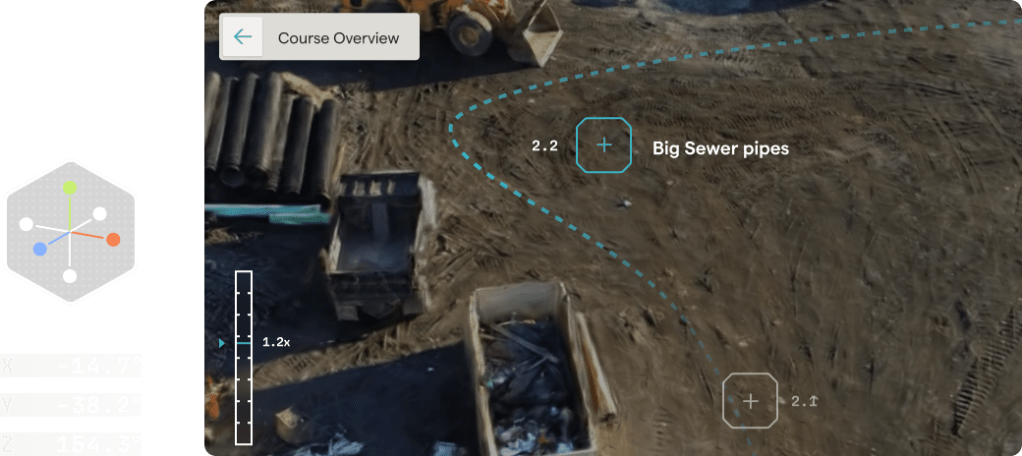
- 3D Reality Capture and Reconstruction: Schemata’s platform initiates the process by converting 2D images (from various sources, including potentially drones, laser scanners, and photogrammetry) into highly accurate, photorealistic 3D environments. This “3D reality capture” creates a precise virtual model of any real-world location, from complex urban settings to challenging natural terrains and intricate equipment. This capability allows military organizations to quickly digitize their training grounds, equipment, and operational environments.
- Spatial AI for Contextual Information: Once the 3D environment is created, Schemata’s proprietary spatial AI applies contextual information to these digital assets. This means that the AI doesn’t just create a visual replica; it embeds semantic data within the 3D models. For example, it understands that a structure is a “building” and not just a collection of pixels, and can identify specific objects, equipment components, or areas of interest within the simulated environment. This semantic understanding is crucial for intelligent interaction and decision-making within the simulation.
- The AI Instructor: A truly transformative element of Schemata’s platform is the integration of an AI-powered virtual instructor. This generative AI instructor can respond to users in real-time through voice or text input. It can identify objects in the virtual environment, offer step-by-step guidance, answer questions, highlight safety hazards or operational steps, and adapt scenarios dynamically. This “copilot”-style training assistance provides personalized, on-demand instruction, akin to having a dedicated expert by a user’s side 24/7 in a physical environment, but with the scalability and adaptability of AI.
- Rapid Content Creation and Cost Efficiency: Schemata claims its technology enables organizations to build training modules 10 times faster and up to 85% more cost-effectively than traditional content development methods. This acceleration and cost reduction are achieved by automating much of the tedious and expensive manual work involved in creating high-fidelity simulations. The ability to quickly generate new training content allows military forces to keep pace with evolving threats, technologies, and doctrines.
- Integration with Existing Systems: While Schemata is pioneering new methods, its focus on seamless integration is crucial for defense adoption. By leveraging its AI to create adaptable 3D data, it can potentially integrate with existing simulation frameworks and C4ISR systems, allowing for enhanced training scenarios that leverage real-time intelligence feeds and common operational pictures.
Impact on Defense and Strategic Applications
Schemata’s innovative platform offers profound implications for the defense sector, impacting several key areas:
- Broadening Access to High-FFidelity Training: Traditionally, advanced simulators have been prohibitively expensive and complex, limiting their use to elite units or specific roles like pilots. Schemata’s platform aims to democratize this access, making immersive and highly effective virtual training available to a much wider range of military personnel, from frontline soldiers to maintenance crews and logistics teams. This addresses the challenge of training 95% of the military that currently lacks access to such advanced tools.
- Enhanced Readiness and Skill Retention: Virtual training has proven to be significantly more effective than traditional methods, with studies indicating up to 75% higher effectiveness in skill retention. By providing realistic, interactive, and repeatable training scenarios, Schemata helps improve muscle memory, decision-making under pressure, and overall operational readiness across various military occupational specialties.
- Realistic Mission Rehearsal and Planning: Commanders can leverage Schemata’s ability to quickly generate photorealistic 3D replicas of specific geographic areas for detailed mission rehearsals. This allows units to “walk through” complex operations in a virtual environment that accurately mirrors the real-world terrain, infrastructure, and even environmental conditions, leading to better planning and execution.
- Accelerated Doctrine and Equipment Familiarization: As new doctrines are introduced or new equipment fielded, military personnel require rapid and effective training. Schemata’s platform can quickly generate simulations for new scenarios or equipment, significantly reducing the time needed for familiarization and proficiency. For example, an operator can practice with new complex physical equipment in a simulated environment before ever touching the real thing.
- Support for Autonomous Systems and AI Integration: The development of spatially-aware AI agents operating within a rich 3D environment with embedded semantic data is not just for human training. It lays the groundwork for training and testing autonomous systems, allowing AI agents to learn and interact with realistic digital twins of the physical world. This is crucial for the future development and deployment of unmanned ground vehicles (UGVs), drones, and other AI-powered military platforms.
- Cost Efficiency in Training Budgets: The promise of up to 85% cost reduction in content creation can free up substantial resources from the DoD’s $12 billion annual simulation training budget. These savings can be reinvested in further innovation, expanded training programs, or other critical defense capabilities.
- Cybersecurity and Data Integrity: While not explicitly detailed on their public site, any company operating with sensitive military data for training and simulation must inherently possess robust cybersecurity measures. The creation of digital twins and AI-driven instructors would necessitate secure data handling, encryption, and access controls to prevent unauthorized access or manipulation of training environments.
Future Outlook and Strategic Importance
Schemata’s emergence signifies a pivotal moment in military training and the broader application of AI in defense. By democratizing access to high-fidelity virtual training, the company is addressing a long-standing gap in military preparedness. Their partnerships and early DoD contracts demonstrate the immediate relevance and adoption of their technology.
As AI continues to advance, Schemata’s platform is poised to evolve, potentially incorporating more sophisticated AI agents for opposition forces, integrating real-time intelligence feeds for dynamic scenario generation, and providing deeper analytical insights into trainee performance. Their vision of “spatially-aware AI agents operating with a full context of the physical world” aligns perfectly with the future trajectory of defense, where AI will play an increasingly integral role in every aspect of operations, from command and control to autonomous systems and human-machine teaming. Schemata is not just building a training platform; it’s building the foundation for how military forces will learn, adapt, and operate in the complex battlefields of tomorrow.