Expanding Global IoT Connectivity Through 5G Satellite Networks
Sateliot, a Barcelona-based satellite telecommunications company, is at the forefront of integrating 5G technology with satellite communications to provide global Internet of Things (IoT) connectivity. By deploying a constellation of low Earth orbit (LEO) satellites, Sateliot aims to bridge the connectivity gap in remote and underserved areas, facilitating seamless IoT device communication worldwide.
Company Overview
Established with the vision of extending terrestrial 5G networks into space, Sateliot focuses on delivering narrowband IoT (NB-IoT) services via satellite. This approach enables standard IoT devices to connect directly to satellites without the need for additional hardware modifications. Sateliot’s strategy involves collaborating with mobile network operators (MNOs) to offer non-terrestrial network (NTN) roaming, thereby enhancing global coverage for IoT applications.
Technological Innovation
Sateliot’s technological framework is built upon the 3rd Generation Partnership Project (3GPP) Release 17 standards, ensuring compatibility with existing cellular networks. By adhering to these standards, Sateliot facilitates seamless integration between terrestrial and satellite networks, allowing IoT devices to maintain connectivity across different environments.
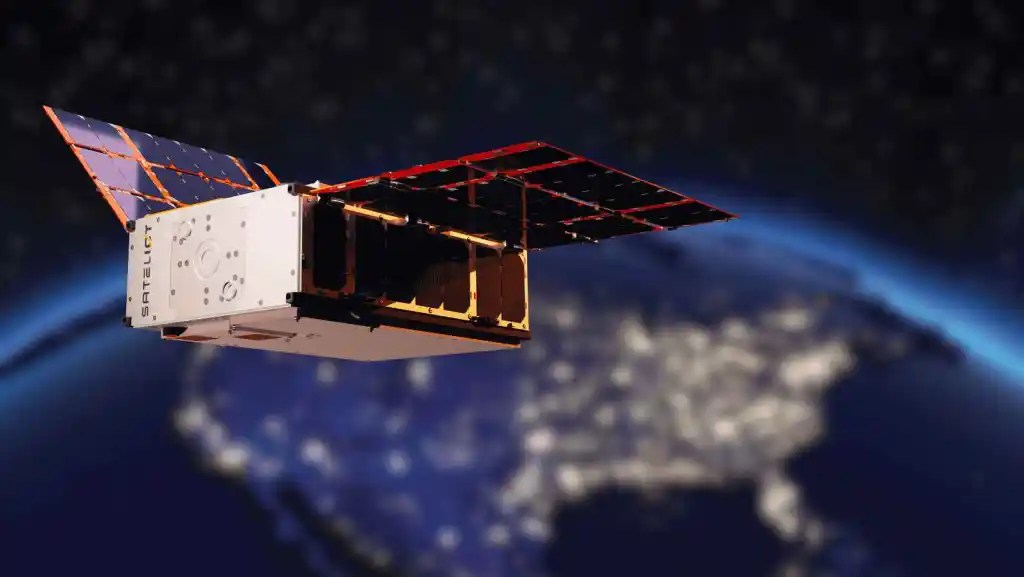
The company’s LEO satellites operate in conjunction with terrestrial networks to provide continuous coverage, particularly in areas lacking traditional infrastructure. This hybrid model ensures that IoT devices remain connected, enabling real-time data transmission for various applications, including agriculture, logistics, environmental monitoring, and maritime operations.
Satellite Constellation and Deployment
Sateliot plans to deploy a constellation of 100 LEO satellites by 2028 to achieve comprehensive global coverage. As of early 2025, the company has successfully launched six satellites and is conducting pilot programs with 12 clients. These initial deployments serve as a foundation for testing and refining the technology before full-scale commercial rollout.
The satellite constellation is designed to provide cost-effective connectivity, with pricing models targeting approximately €2.50 per device per month. This affordability positions Sateliot as a competitive alternative to existing satellite communication providers, particularly in sectors where large-scale IoT deployments are essential.

Strategic Partnerships
To enhance its service offerings and expand its market reach, Sateliot has established strategic partnerships with various organizations:
- Indra: A Spanish defense and technology company that holds a 4% stake in Sateliot. This partnership focuses on providing secure satellite communications for defense applications, reducing reliance on non-European providers.
- Comfone: A collaboration that enables Sateliot to offer 5G satellite connectivity with roaming capabilities to 480 MNOs worldwide, facilitating broader adoption of its services.
- Eseye: A partnership aimed at integrating satellite and terrestrial networks to provide seamless global IoT connectivity, enhancing the reliability and reach of IoT deployments.
These alliances are instrumental in positioning Sateliot as a key player in the satellite IoT market, enabling the company to leverage existing infrastructures and customer bases.
Funding and Investment
In March 2025, Sateliot closed a €70 million Series B funding round to support the expansion of its satellite constellation and commercial operations. Key contributors to this round included:
- Hyperion Fund: Invested €10 million, focusing on advancing Sateliot’s defense applications.
- Spanish Government: Through the Sociedad Española de Transformación Tecnológica (SETT), invested €13.8 million to support the development of sovereign telecommunications infrastructure.
- European Investment Bank (EIB): Provided a €30 million loan to co-finance the deployment of the satellite network.
These investments underscore the strategic importance of Sateliot’s mission to enhance global connectivity and support Europe’s digital sovereignty.
Market Expansion and Applications
Sateliot’s services are tailored to address connectivity challenges across various sectors:
- Agriculture: Enabling precision farming through real-time monitoring of soil conditions, weather patterns, and crop health in remote areas.
- Logistics and Transportation: Facilitating asset tracking and fleet management across regions lacking terrestrial network coverage.
- Environmental Monitoring: Supporting data collection for climate research, wildlife tracking, and natural disaster management.
- Maritime Operations: Providing connectivity for vessels and offshore platforms to enhance navigation, safety, and operational efficiency.
In May 2025, Sateliot expanded its presence to the Australian market, securing regulatory approvals and establishing contracts with companies generating over AUD 15 million in recurring revenues.
Leadership and Vision
Jaume Sanpera, Sateliot’s CEO, brings nearly three decades of experience in the telecommunications industry. He has founded multiple successful companies, including Eurona and Ambientum, and is recognized for his contributions to technological entrepreneurship in Spain.
Under Sanpera’s leadership, Sateliot aims to achieve €1 billion in annual revenue by 2030. The company’s growth strategy focuses on scaling its satellite constellation, expanding its customer base, and forging strategic partnerships to enhance service offerings.
Future Outlook
Sateliot’s innovative approach to integrating 5G technology with satellite communications positions it as a transformative force in the IoT landscape. By providing affordable, global connectivity, the company addresses critical gaps in existing network infrastructures, enabling a wide range of applications across various industries.
With continued investment, strategic partnerships, and a clear vision for growth, Sateliot is poised to play a significant role in shaping the future of global IoT connectivity.