Advancing Maritime Intelligence with Autonomous Surface Vehicles
Saildrone, founded in 2012 by British engineer Richard Jenkins, is a U.S.-based company specializing in the development and deployment of wind- and solar-powered uncrewed surface vehicles (USVs). These autonomous vessels are designed to collect high-resolution oceanographic and atmospheric data, providing critical insights for various applications, including climate research, maritime security, and environmental monitoring. With a fleet that has logged over 50,000 days at sea and traversed more than 2 million nautical miles, Saildrone is at the forefront of transforming how we observe and understand the world’s oceans.
Company Overview
Headquartered in Alameda, California, Saildrone has grown from a visionary startup into a key player in maritime data collection and surveillance. The company’s USVs are equipped with advanced sensors and AI capabilities, enabling them to operate autonomously for extended periods, often up to 12 months, without the need for refueling or maintenance. This endurance allows for continuous data collection in some of the most remote and challenging ocean environments.

Technological Innovations
Uncrewed Surface Vehicles (USVs)
Saildrone’s fleet comprises three primary classes of USVs:
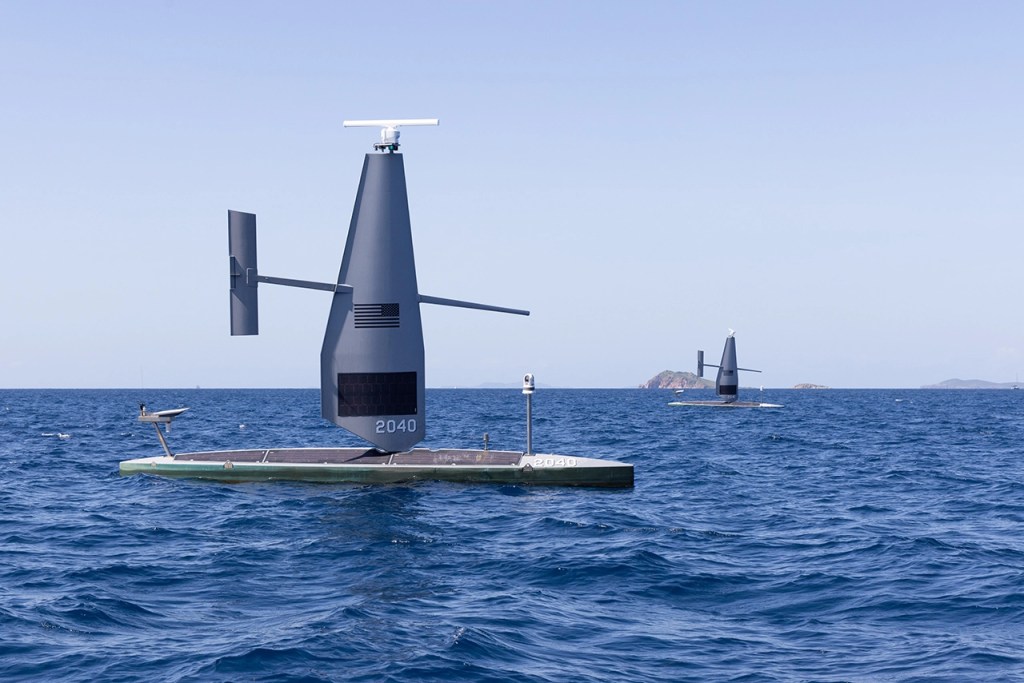
- Explorer: A 23-foot vessel designed for long-duration missions, capable of collecting meteorological and oceanographic data.
- Voyager: A mid-sized platform optimized for maritime security and surveillance operations.
- Surveyor: A 65-foot USV equipped with multibeam sonar systems for deep-ocean mapping and bathymetric surveys.
These USVs utilize wind propulsion for movement and solar panels to power onboard instruments, ensuring sustainable and efficient operations.
AI Integration
In a strategic partnership with Palantir Technologies, Saildrone has integrated advanced AI capabilities into its USVs. This collaboration enhances real-time data processing and decision-making, particularly for maritime intelligence, surveillance, and reconnaissance (ISR) missions. The AI systems enable the rapid identification of anomalies and potential threats, providing valuable insights for defense and security applications.
Key Missions and Applications
Climate and Environmental Research
Saildrone’s USVs have been instrumental in collecting data for climate studies. Notably, in 2019, a Saildrone completed the first autonomous circumnavigation of Antarctica, gathering critical data on carbon dioxide exchange between the ocean and atmosphere. This mission provided unprecedented insights into the Southern Ocean’s role in global carbon cycling.
Hurricane Monitoring
In collaboration with the National Oceanic and Atmospheric Administration (NOAA), Saildrone deployed USVs into active hurricanes to collect real-time data on storm dynamics. In 2021, a Saildrone entered Hurricane Sam, capturing valuable information that contributes to improved hurricane forecasting and understanding of storm intensification processes.
Maritime Security
Saildrone’s USVs are increasingly utilized for maritime domain awareness and security operations. In May 2025, Denmark announced the deployment of four Saildrone USVs for maritime surveillance missions in its waters, aiming to protect critical undersea infrastructure and monitor busy shipping routes.

Strategic Partnerships
Collaboration with Palantir Technologies
The partnership with Palantir Technologies focuses on enhancing Saildrone’s AI-driven maritime intelligence capabilities. By integrating Palantir’s data analytics platform, Saildrone aims to provide comprehensive situational awareness and decision support for maritime operations.
Seabed 2030 Initiative
Saildrone has joined the Seabed 2030 project, a global initiative to map the entire ocean floor by 2030. Utilizing its Surveyor-class USVs, Saildrone contributes high-resolution bathymetric data, advancing our understanding of the ocean’s topography and supporting various scientific and commercial endeavors.
Funding and Growth
Saildrone has secured significant funding to support its technological advancements and global expansion. In May 2025, the company closed a $60 million financing round led by the Export and Investment Fund of Denmark (EIFO), aimed at bringing maritime autonomy to Europe. This investment enables broader access to Saildrone’s maritime intelligence technology for critical European security and defense needs.
Overall, Saildrone has raised over $325 million in funding from various investors, including Horizons Ventures, Social Capital, and the Schmidt Family Foundation, reflecting strong confidence in the company’s mission and capabilities.
Conclusion
Saildrone’s innovative approach to autonomous ocean data collection and maritime surveillance positions it as a leader in the field. By combining sustainable propulsion methods with advanced AI and sensor technologies, the company addresses critical challenges in climate research, maritime security, and environmental monitoring. As Saildrone continues to expand its operations and partnerships, it plays a pivotal role in enhancing our understanding and protection of the world’s oceans.