
Orchestrating the NewSpace Revolution for Sovereign Futures
In the dawn of the 21st century, space—once the exclusive domain of national governments and colossal aerospace giants—is undergoing a profound democratization. This “NewSpace” era, characterized by reduced launch costs, miniaturization of technology, and agile development cycles, is creating unprecedented opportunities for commercial and governmental entities alike. At the vanguard of this transformative movement, headquartered in Germany, stands Reflex Aerospace. Founded with the audacious vision to redefine satellite manufacturing, Reflex Aerospace is swiftly becoming a pivotal player in delivering high-performance, tailor-made satellite platforms with unmatched speed, serving both commercial and, increasingly, critical defence and security applications.
Reflex Aerospace is not merely building satellites; it is forging the very infrastructure for a more connected, observed, and strategically independent future. Their story is one of audacious entrepreneurship, innovative manufacturing, and a profound understanding of the imperative for agile, sovereign space capabilities.
The Spark of Innovation: Genesis in a Changing Cosmos (2021)
Reflex Aerospace was founded in May 2021 in Munich, Germany, by a visionary team: CEO Walter Ballheimer, COO Alexander Genzel, and Christian Lindener. These founders brought together diverse and complementary expertise, united by a shared observation: while launch costs were plummeting and space technology was becoming more accessible, the methodologies for designing and manufacturing satellites remained largely traditional, slow, and expensive. There was a glaring opportunity to apply the latest advancements in manufacturing and software-defined operations to revolutionize satellite production.
Their mission was clear from the outset: to leverage cutting-edge techniques to modernize satellite development and production, thereby achieving significantly faster delivery times and enhanced reliability. They set out to become a “black-label satellite platform manufacturer,” offering customers tailor-made, high-performance, small satellite platforms at a competitive price. This approach was designed to cater to the burgeoning demand for dual-use satellites—platforms serving both commercial markets (like Earth Observation and SatCom) and the increasingly vital needs of the defence and government sectors.
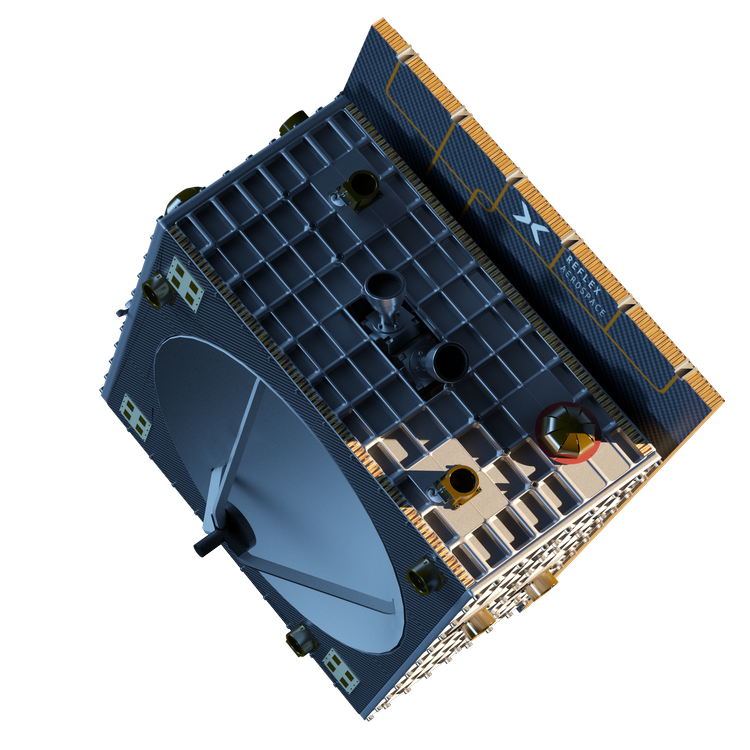
The initial months were characterized by intense conceptualization and team building. By November 2021, Reflex Aerospace had grown sufficiently to open its first office in the Friedrichshain neighborhood of Berlin, positioning itself at the emerging heart of Germany’s NewSpace ecosystem.
Laying the Foundations: Early Projects and Strategic Validation (2021-2023)
Even in its nascent stages, Reflex Aerospace quickly attracted attention for its innovative approach. A significant early milestone arrived in December 2021 when Reflex was selected by the European Commission to lead a foundational study that would eventually contribute to the IRIS² (Infrastructure for Resilience, Interconnectivity and Security by Satellite) project. IRIS² is a highly strategic European initiative aiming to provide sovereign and secure satellite communications capabilities, crucial for the continent’s digital autonomy and defence needs. This selection validated Reflex’s technical vision and its potential to play a key role in European space independence.
In December 2022, Reflex Aerospace secured a significant €7 million in seed financing, with prominent investors including Alpine Space Ventures, High-Tech Gründerfonds (HTGF), and Bayern Kapital. This funding was critical, earmarked for further product development, specifically for their innovative “MicroFactory” concept, and for the crucial expansion of their engineering and manufacturing teams. The investment underscored investor confidence in Reflex’s disruptive business model and its ability to capture a significant share of the rapidly growing satellite market.
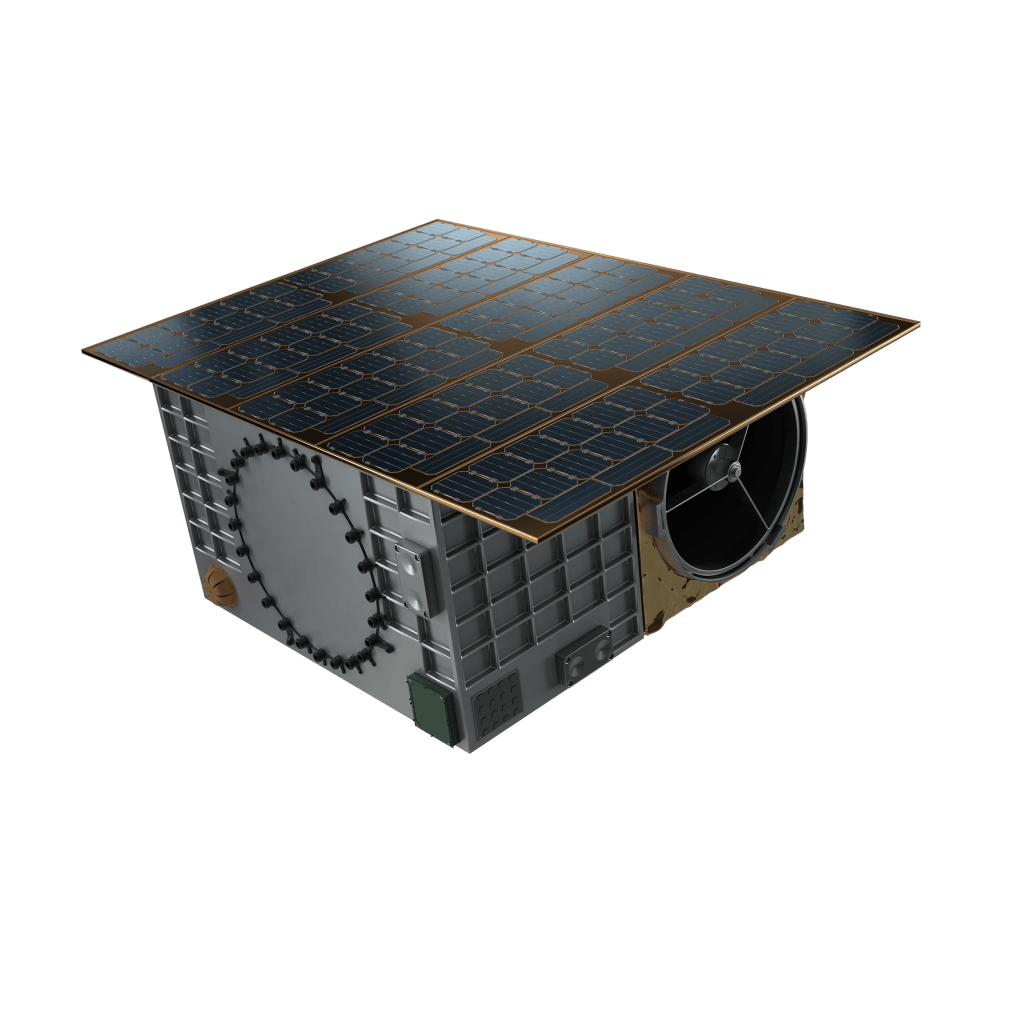
May 2023 marked another pivotal moment: Reflex signed its first commercial contract with Media Broadcast Satellite (MBS). This agreement was transformative, converting what was initially conceived as a demonstration mission into a full-fledged commercial endeavor. This external validation from a paying customer was a powerful testament to the market’s demand for Reflex’s “lightspeed” delivery promise. The satellite for this mission, later named SIGI, was scheduled for launch in late 2024.
The MicroFactory: Revolutionizing Satellite Production
At the core of Reflex Aerospace’s disruptive strategy is its MicroFactory concept. Unlike traditional satellite manufacturing, which often involves lengthy, bespoke assembly processes in massive cleanrooms, the MicroFactory is designed for agile, semi-automated production of high-performance satellites. This approach leverages modern manufacturing techniques, advanced robotics, and a high degree of vertical integration to drastically reduce manufacturing lead times—aiming for delivery within 12 months for new designs.
Construction of Reflex’s first satellite manufacturing MicroFactory in Munich commenced in February 2024. The facility was designed to optimize the Manufacturing, Assembly, Integration, and Test (MAIT) processes, integrating secure-by-design modules and hardware-accelerated encryption directly into the platforms. By December 2024, the initial construction of the MicroFactory was complete, signifying a major step towards scalable, efficient in-house production and strengthening Reflex’s verticalization efforts. This capability is vital for meeting the rapid deployment needs of both commercial constellations and defence programs.
Achieving Flight Heritage and Expanding Commercial Footprint (2025)
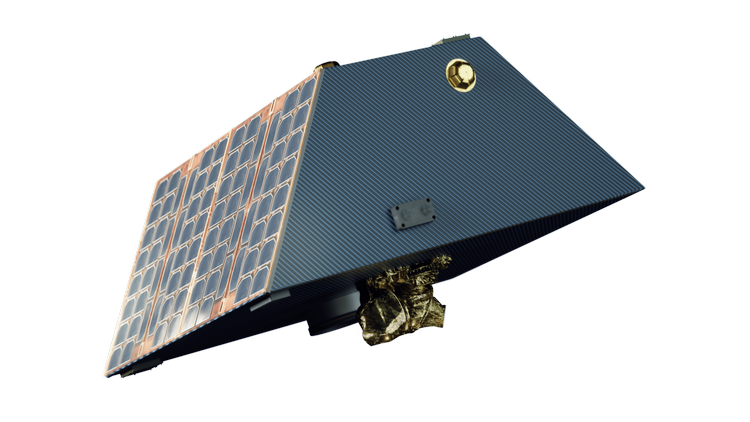
The early months of 2025 were momentous for Reflex Aerospace. In January 2025, the company successfully launched SIGI, its first custom satellite, on SpaceX’s Transporter-12 mission. This achievement of “flight heritage” was a critical validation of Reflex’s design, manufacturing processes, and operational capabilities. SIGI, a 16U nanosatellite, carried a payload for Media Broadcast Satellite (MBS), including a multispectral camera and neural network for imagery analysis, acting as the pilot mission for what could become “The Balkan Constellation.” This success proved Reflex’s ability to deliver on its promise of high-performance, low-lead-time custom satellite platforms.
Simultaneously, Reflex continued its commercial momentum. In March 2024 (as per Reflex’s website, though the initial announcement was likely earlier for the contract signing and confirmed later for the public release), Reflex signed its second commercial contract with Marble Imaging for MIRI. MIRI is envisioned as the first satellite of a planned 200-satellite constellation for Earth Observation, further solidifying Reflex’s role in supporting large-scale commercial space initiatives.
The company’s rapid growth in personnel also reflected its expanding order book. By July 2024, Reflex Aerospace had reached 50 employees, a clear indicator of its accelerating trajectory.
Strategic Thrust into Defence and Sovereign Capabilities: OPTIMAS and SAR
Reflex Aerospace’s commitment to dual-use capabilities, especially for the defence sector, became increasingly evident through strategic project engagements:
- OPTIMAS: Advancing Secure Laser Communications for Defence (November 2024) A crucial contract with direct defence implications was signed in November 2024 for the OPTIMAS project. This satellite, developed in partnership with Navantia and funded by the European Defence Fund (EDF), is dedicated to advancing free-space optical communication systems for multi-domain defence applications. OPTIMAS represents a significant leap in aerospace communication, enabling high-speed, secure data transfer across satellite constellations, drones, naval, and ground units. Reflex Aerospace is overseeing the space segment studies and design, including the satellite platform development, manufacturing, testing, and laser communications payload integration. This project positions Reflex at the cutting edge of cyber-secure laser communications, a technology vital for future military networks to counter jamming and maintain high-bandwidth connectivity in contested environments. It underscores Europe’s leadership in defence innovation and its push for greater strategic autonomy.
- SAR Capabilities for European Sovereignty with Umbra (April 2025) In April 2025, Reflex Aerospace announced a pivotal partnership with US-based Umbra, a specialist in Synthetic Aperture Radar (SAR) technology. This collaboration aims to deliver advanced, customizable SAR satellite solutions tailored specifically for European sovereignty and security goals. The first satellite under this new agreement is targeted for launch in 2027. This initiative is designed to bolster Europe’s technological independence in space, particularly in the realm of high-resolution Earth observation for intelligence, surveillance, and reconnaissance (ISR). SAR satellites are invaluable because they can capture high-resolution imagery of Earth’s surface regardless of weather or lighting conditions, a critical capability for defence intelligence. The partnership emphasizes a European-focused supply chain, with integration occurring in Germany, ensuring a sovereign remote sensing capability. Walter Ballheimer, CEO of Reflex Aerospace, highlighted that this partnership is creating a “new, game-changing offering” for European customers whose options for SAR satellites were previously limited, predicting that Reflex’s satellites will soon be the “backbone of several European ISR constellations.”
Building an Ecosystem: Partnerships for End-to-End Solutions
Reflex Aerospace understands that delivering comprehensive space solutions requires robust partnerships across the value chain.
In October 2023, Reflex Aerospace and Telespazio Germany signed a cooperation agreement to provide end-to-end satellite solutions. This partnership combines Reflex’s expertise in payload-specific satellites with Telespazio’s capabilities in ground segment and mission control (delivered through its EASE-Rise platform). This collaboration allows customers to access a seamless, integrated service for applications like communications and Earth Observation, streamlining operations and expanding global reach. It reinforces German collaboration in the space sector and ensures compatibility for future projects.
Most recently, in April 2025, Reflex Aerospace and Sidus Space signed a Memorandum of Understanding (MOU) to establish a U.S.-based Joint Venture. This strategic alliance aims to deliver agile, high-performance satellite platforms for commercial, defence, and government customers worldwide. The joint venture will leverage Sidus’ expertise in mission operations, technology integration, and advanced manufacturing, alongside Reflex’s rapid satellite development capabilities and high-performance components. This partnership is designed to accelerate Reflex’s expansion into the critical U.S. market and focus on multi-orbit missions (LEO, MEO, small GEO), In-Orbit Demonstration (IOD) and In-Orbit Validation (IOV) campaigns, and advanced applications such as LiDAR, software-defined radio (SDR), on-orbit surveillance, and even refueling missions. Walter Ballheimer emphasized that this collaboration “accelerates Reflex’s vision to deliver scalable satellite systems and meet the rising demand for high-performance, rapidly-deployable spacecraft.”
These partnerships illustrate Reflex’s strategic vision: to build not just individual satellites, but a robust ecosystem that delivers comprehensive, sovereign space capabilities.
Technology and Product Offerings: The OmniFlex Platform and Beyond
Reflex Aerospace specializes in designing and manufacturing custom-built satellites for Low Earth Orbit (LEO) applications, with platforms supporting payloads ranging from 100 kg to 500 kg. Their core offering revolves around the OmniFlex Satellite Bus, a state-of-the-art, multi-mission capable platform.
The OmniFlex bus showcases Reflex’s commitment to versatility and innovation. It supports a wide range of applications from Earth observation to communication and scientific research, offering a payload mass capacity of up to 250 kg and a platform mass ranging from 85 to 500 kg. Key features include:
- High Pointing Accuracy: With an impressive pointing knowledge accuracy of 0.005 degrees, OmniFlex enables precise satellite positioning and operation, crucial for sophisticated Earth observation instruments (e.g., high spatial resolution, hyperspectral, LiDAR, SAR, infrared).
- Robust Data Handling: It features redundant storage with a capacity of 1 TB, ensuring data reliability and security.
- Advanced Propulsion: Incorporates cutting-edge propulsion systems with tailored thrust levels and Delta-V capabilities to meet specific mission requirements, allowing for unprecedented maneuverability and orbit adjustments – particularly vital for defence applications that require rapid repositioning or evasive maneuvers.
- High-Throughput Communications: Supports high-throughput X/Ka/Ku-band RF data links and optical data links for efficient communication, vital for transmitting large volumes of intelligence data.
- Secure by Design: Integrates secure-by-design modules and hardware-accelerated encryption, addressing the critical cybersecurity needs of dual-use and defence missions.
- Long Design Lifetime: With a design lifetime of seven years, OmniFlex is built for longevity and performance, maximizing return on investment for operators.
Beyond the core platform, Reflex designs custom solutions for diverse mission profiles, including In-Orbit Demonstration (IOD)/In-Orbit Validation (IOV) campaigns, Space-to-Ground Energy Transmission, Precision Navigation, Emergency Response, Geospatial Data Collection, and Global Navigation Satellite System (GNSS) Positioning, Navigation, and Timing (PNT) applications.
The Future Trajectory: Global Expansion and Sovereign Space
Reflex Aerospace’s trajectory is one of aggressive growth and strategic impact. Their success with SIGI, coupled with the rapidly expanding commercial and governmental demand for agile space capabilities, positions them for continued expansion. They anticipate pushing into new geographic locations, including North America, leveraging their partnership with Sidus Space.
The emphasis on a European-focused supply chain for projects like the SAR partnership with Umbra underscores a broader trend towards fostering sovereign capabilities in space. As geopolitical tensions rise and reliance on space assets intensifies, nations are increasingly seeking to reduce dependency on foreign providers for critical satellite infrastructure. Reflex Aerospace, with its German roots and commitment to rapid, secure, and custom-built solutions, is perfectly positioned to meet this growing demand for strategic autonomy in space.
By blending verticalized in-house design and manufacturing with end-to-end support, secure-by-design modules, and high-performance avionics, Reflex Aerospace is fundamentally redefining satellite development. They are enabling “lightning-fast innovation in space,” offering a compelling alternative to traditional, slower procurement models. Their story is a powerful testament to how a NewSpace startup can rapidly ascend to become a critical enabler of national security and a driving force in the commercialization of space, ensuring that crucial orbital capabilities are delivered at the speed of relevance for a rapidly evolving world.