Igniting the Future of Space Travel
In the vast, silent arena of space, where the distances are astronomical and the challenges immense, a quiet revolution is taking shape. It’s a revolution driven by an audacious vision: to redefine how we travel through the cosmos, making once-unimaginable journeys commonplace. At the heart of this ambition lies Pulsar Fusion, a UK-based company that isn’t just dreaming of faster, more efficient space travel – it’s building the engines to make it a reality.
The narrative of space exploration has long been dominated by the thunderous roar of chemical rockets, powerful but inherently limited by their fuel consumption and the resulting travel times. For decades, humanity has yearned for a breakthrough, a propulsion system that could unlock the true potential of interplanetary travel, allowing us to venture deeper, faster, and more frequently into our solar system and beyond. Pulsar Fusion is stepping into this void, not with incremental improvements, but with a bold leap forward, pushing the boundaries of what’s possible with both cutting-edge electric propulsion and, more fundamentally, the elusive promise of nuclear fusion.
From Earth to Orbit and Beyond: The Propulsion Spectrum
Pulsar Fusion’s story isn’t just about a singular, futuristic dream. It’s a pragmatic, multi-pronged approach to space propulsion, addressing immediate needs while simultaneously laying the groundwork for a transformative future. The company operates across a spectrum of technologies, each designed to tackle specific challenges in the vast expanse of space.
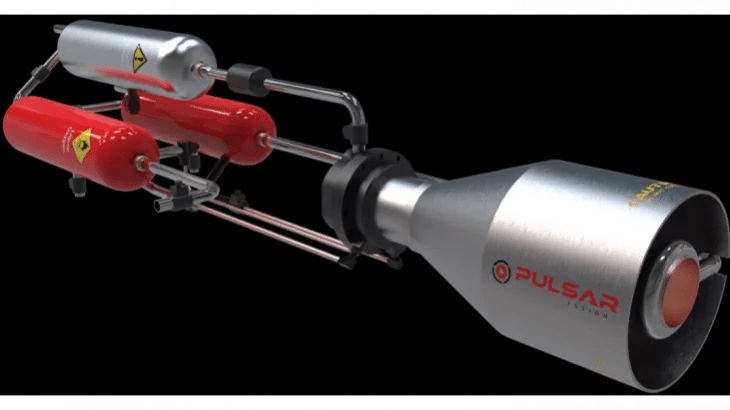
At one end of this spectrum are the electric propulsion systems. These are not the fiery rockets that launch payloads from Earth, but rather highly efficient thrusters designed to operate in the vacuum of space. Think of them as the silent workhorses of orbit, nudging satellites into their precise positions, maintaining their trajectories, and extending their operational lifetimes for years. With the burgeoning satellite industry and the increasing size and complexity of orbital assets, the demand for reliable and powerful in-space propulsion is soaring. Pulsar Fusion is meeting this demand with its range of Hall Effect Thrusters, aptly named LEOBEAR, Moonranger, and Marsranger, designed for Low Earth Orbit (LEO), lunar, and Martian missions respectively. These systems, fuelled by inert gases like Xenon and Krypton, generate thrust by accelerating plasma, a superheated, ionized gas. The beauty of electric propulsion lies in its exceptional fuel efficiency, allowing satellites to carry less propellant and more valuable payload, or simply operate for much longer. Pulsar’s recent successful tests of these larger-than-conventional plasma engines, conducted in massive vacuum chambers to simulate the harsh conditions of space, underscore their commitment to delivering robust and reliable solutions for today’s space industry.

Beyond electric propulsion, Pulsar also delves into hybrid rocket propulsion. These systems combine elements of both solid and liquid rockets, aiming to mitigate the disadvantages of each. Hybrid rockets offer a safer alternative to solid rockets by separating the fuel and oxidizer, making handling less hazardous. They also simplify the mechanical complexity often associated with purely liquid-fueled engines. This pragmatic approach allows Pulsar to offer versatile and reliable options for various in-space maneuvering needs.
The Fusion Dream: Sunbird and the Quest for Interstellar Travel
While electric and hybrid propulsion systems address current and near-future needs, the true north star of Pulsar Fusion’s ambition lies in nuclear fusion propulsion. This is where the story takes a truly captivating turn, delving into the realm of science fiction that Pulsar is diligently working to transform into scientific fact.
The concept is breathtaking: harnessing the same power that fuels the sun and stars to propel spacecraft across vast cosmic distances. Fusion power, unlike fission (used in conventional nuclear reactors), involves fusing light atomic nuclei to release immense amounts of energy, without producing long-lived radioactive waste. If mastered, fusion propulsion promises to dramatically reduce transit times for interplanetary missions, turning months-long journeys into mere weeks or even days. Imagine reaching Mars in half the time, or opening up the outer solar system to routine exploration. This is the promise of fusion.
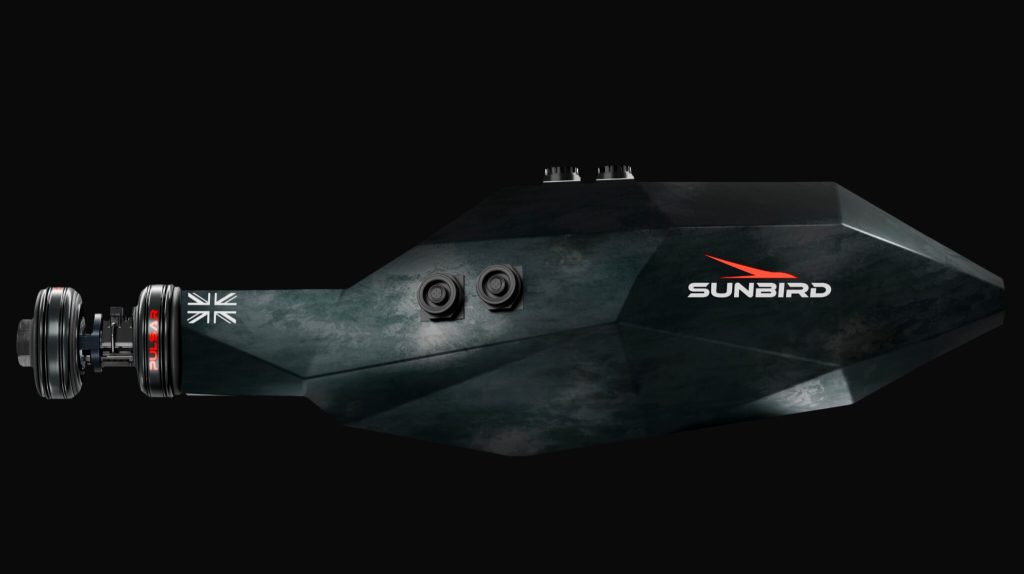
Pulsar Fusion’s flagship project in this domain is the Direct Fusion Drive (DFD), also known as ‘Sunbird.’ This revolutionary engine is envisioned not just to provide immense thrust, but also to generate electrical power for the spacecraft, creating a self-sustaining and incredibly efficient propulsion system. The challenge is immense. Reaching and sustaining the extreme temperatures and pressures required for fusion is one of humanity’s greatest scientific and engineering feats. It involves controlling superheated plasma, hotter than the core of the sun, and channeling its energy to generate thrust.
Pulsar Fusion is not working in isolation on this grand endeavor. The global investment in nuclear fusion has seen a dramatic surge in recent years, with billions poured into the sector, raising hopes of a breakthrough. Pulsar is at the forefront of this global effort, contributing to the advancement of fusion technology and specifically focusing on its application for space travel. Their ongoing research and development, including breaking a 24-year-old fusion record by generating the highest sustained fusion energy pulse, demonstrates their tangible progress in this incredibly complex field.
The Human Element: Visionaries and Innovators
Behind every audacious technological leap is a team of dedicated individuals, and Pulsar Fusion is no exception. The company’s narrative is intertwined with the vision and expertise of its founders and scientists. Individuals like Richard Dinan, the founder, and Dr. James Lambert, Head of Operations, are not just engineers; they are pioneers driven by a profound belief in the transformative potential of their work.
Their passion for plasma physics and their commitment to pushing the boundaries of in-space propulsion are evident in their relentless pursuit of breakthroughs. They understand the intricacies of developing engines that must operate reliably for years in the unforgiving vacuum of space, enduring extreme temperatures and pressures. Their collaboration with institutions like the University of Southampton and receiving partial funding from the UK Space Agency underscore the national importance and scientific rigor of their endeavors. This collaborative spirit, pooling expertise and resources, is crucial for tackling challenges of this magnitude.
Furthermore, the company recognizes the broader implications of its work. Beyond the immediate technological advancements, Pulsar Fusion is contributing to the UK’s standing as a center of excellence in plasma physics and space technology, creating high-tech jobs and fostering a new generation of scientific talent. This commitment to national capability and long-term scientific investment forms a vital part of their story.
The Path Ahead: A Future Shaped by Propulsion
Pulsar Fusion’s journey is far from over. The path to routine interplanetary travel powered by fusion is long and arduous, filled with scientific hurdles and engineering challenges. However, the company’s dual approach – delivering immediate, practical solutions with electric and hybrid propulsion while relentlessly pursuing the transformative potential of fusion – positions them uniquely in the evolving landscape of the space industry.
The increasing demand for larger, more powerful in-space propulsion systems for the burgeoning satellite market provides a solid foundation for their current operations. This allows them to build expertise, refine their manufacturing processes, and generate revenue, all while steadily advancing their long-term fusion goals.
Looking to the future, Pulsar Fusion envisions a world where deep space exploration is no longer a distant dream but a tangible reality. A world where missions to Mars are measured in weeks, not months, and where the vast resources of the asteroid belt become more accessible. Their work has the potential to unlock new frontiers of scientific discovery, enhance global communication and observation capabilities, and even contribute to the long-term sustainability of humanity by enabling access to extraterrestrial resources.
Pulsar Fusion isn’t just building engines; it’s building a future where the boundless possibilities of space are within closer reach. Their story is one of innovation, perseverance, and the unyielding human desire to explore, pushing the boundaries of what we thought possible and propelling us towards a new era of cosmic exploration. As they continue to test, innovate, and break new ground, the world watches with bated breath, anticipating the day when the Sunbird takes flight, carrying humanity deeper into the final frontier.