
Forging a Hypersonic Future in Defence
In the rapidly evolving landscape of defense and aerospace, a new breed of innovators is emerging, pushing the boundaries of what’s possible. Among them stands New Frontier Aerospace (NFA), a company that isn’t just dreaming of the future but actively building it, piece by 3D-printed piece. Founded in 2020 and headquartered in Kent, Washington, NFA has rapidly distinguished itself by tackling some of the most complex challenges in propulsion and high-speed flight, with significant implications for both civil and military applications.
At the heart of NFA’s groundbreaking work is their revolutionary Mjölnir rocket engine. More than just a powerful piece of machinery, Mjölnir embodies NFA’s commitment to efficiency, reusability, and environmental responsibility – concepts that are increasingly vital in the modern defense sector. This full-flow staged combustion engine, a marvel of modern engineering, is designed for exceptional efficiency and a very high thrust-to-weight ratio. What truly sets it apart, however, is its ability to run on clean liquid natural gas (LNG), with the audacious goal of achieving a net carbon-negative footprint when sourced renewably. This dedication to sustainable propulsion is not merely an environmental statement; it’s a strategic advantage, offering a cleaner, potentially more accessible, and ultimately more resilient fuel source for future operations.
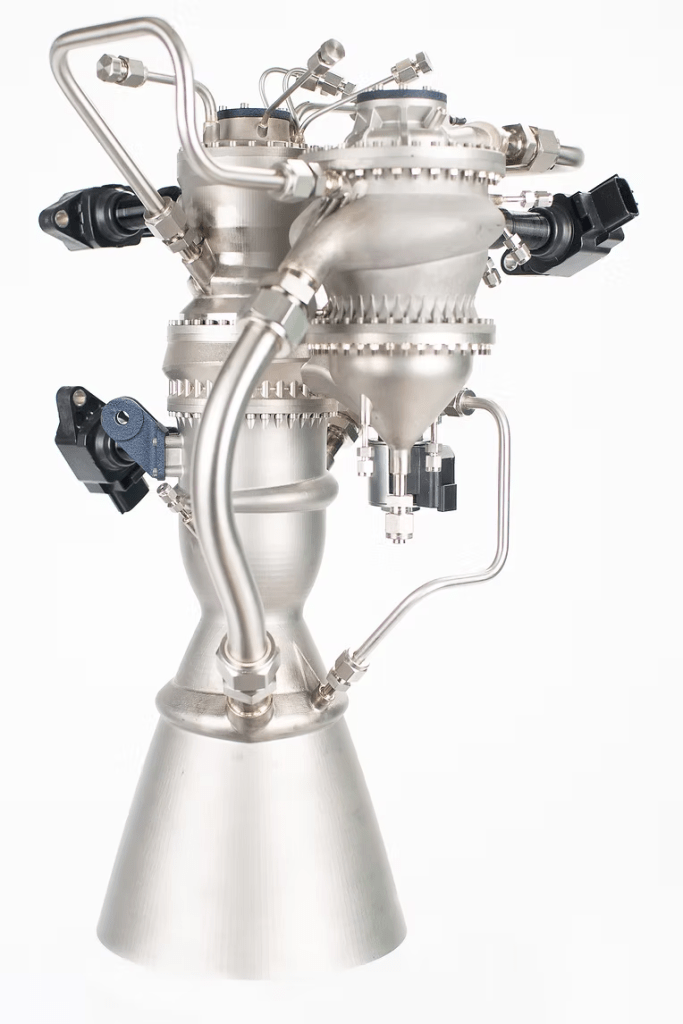
The name “Mjölnir,” drawn from Norse mythology’s powerful hammer of Thor, is no accident. It reflects the company’s ambition to forge powerful, reliable tools for a new era. The engine’s design allows for deep throttling, easy start/stop capabilities, and true two-commodity operations, making it highly operable and reusable. This reusability is a game-changer, promising to significantly reduce operational costs and increase the frequency of missions – a crucial factor in both commercial endeavors and agile defense responses.
NFA’s vision extends far beyond just an engine. Mjölnir is the driving force behind a suite of ambitious projects designed to redefine air and space transportation. One of their flagship projects is the Pathfinder, a hypersonic Vertical Takeoff and Landing (VTOL) Unmanned Aerial System (UAS). The Pathfinder is envisioned for diverse applications, from weapons testing and suborbital point-to-point cargo transport to potential roles in surveillance and reconnaissance, and even air dominance. Its ability to take off and land vertically eliminates the dependence on traditional runways, offering unprecedented flexibility and responsiveness – a critical asset for military logistics and rapid deployment in contested environments. The anticipation surrounding Pathfinder’s first hovering flight, projected for early 2026, underscores the tangible progress NFA is making.

Beyond Earth’s atmosphere, NFA is also developing Bifröst, an orbital transfer spacecraft. Continuing the Norse mythological theme, Bifröst, the rainbow bridge connecting realms, symbolizes NFA’s ambition to bridge distances in space. This spacecraft is designed for missions ranging from Low Earth Orbit (LEO) to cislunar space and even interplanetary destinations. For the defense sector, Bifröst represents a leap forward in space mobility and logistics, offering the potential for more efficient deployment of satellite constellations, active debris removal, and enhancing overall space superiority. The planned flight of Bifröst in space by 2027 is a testament to NFA’s aggressive roadmap and the confidence in their propulsion technology.
The journey of New Frontier Aerospace is a compelling story of innovation fueled by experience. The company was co-founded by Bill “Burners” Bruner, a name that resonates with deep expertise in aerospace and national security. A decorated Air Force Colonel and F-111 Weapon Systems Officer who served in the Gulf War, Bruner brings a profound understanding of military operations and the critical need for advanced capabilities. His tenure as an Assistant Administrator at NASA for Legislative and Intergovernmental Affairs further cemented his grasp of the intricate interplay between technology, policy, and national objectives. This blend of military operational experience and high-level aerospace leadership is a significant factor in NFA’s focused and impactful development strategy. Bruner’s lifelong fascination with space, sparked during the Apollo program, has culminated in a company poised to address modern strategic challenges.
NFA’s rapid advancements have not gone unnoticed by key government stakeholders. The company has secured significant backing from various agencies, demonstrating the strategic importance of their work. Notably, National Security Innovation Capital (NSIC), a part of the Pentagon’s Defense Innovation Unit, has been a consistent supporter. In 2023, NSIC awarded NFA a $1.5 million contract extension, recognizing the potential of the Mjölnir engine. Furthermore, NASA has provided two small-business grants totaling nearly $1 million in 2023 and 2024, further validating the technical prowess and potential of NFA’s propulsion systems. This dual-track funding, from both defense and civil space agencies, highlights the dual-use nature of NFA’s technologies and their broad applicability.
The successful hot fire tests of the 3D-printed Mjölnir rocket engine, announced in June 2025, marked a pivotal moment for NFA. These tests validated the engine’s performance, efficiency, and reliability, paving the way for the forthcoming flight tests of Pathfinder. The ability to 3D print complex engine components not only accelerates development but also offers design flexibility and potential for on-demand manufacturing, adding another layer of strategic advantage.
New Frontier Aerospace operates in a competitive landscape, with other innovators like Boom Supersonic, Exosonic, and Hermeus also vying for leadership in the high-speed flight domain. However, NFA’s unique focus on a reusable, rocket-powered VTOL hypersonic aircraft, combined with their commitment to clean energy, carves out a distinct and compelling niche. Their approach directly addresses key challenges for future military operations, such as reducing reliance on vulnerable fixed infrastructure and enabling rapid, long-range mobility.
In a world where geopolitical landscapes are constantly shifting and technological superiority is paramount, companies like New Frontier Aerospace are vital. Their innovations in hypersonic flight and advanced propulsion are not just about faster travel; they are about enhancing national security, enabling quicker humanitarian responses, and unlocking new frontiers in space. By consistently delivering on their ambitious technical roadmap and securing crucial government partnerships, New Frontier Aerospace is not merely a startup; it is a testament to American innovation, pushing the boundaries of what’s possible and building the foundational technologies for a more secure and connected future. Their story is a powerful reminder that the new frontiers of defense are being forged by those who dare to dream beyond the conventional, transforming audacious ideas into tangible realities.