Charting the Future of Autonomous Ocean Operations
In the vast and increasingly critical domain of the ocean, the demand for safer, more efficient, and sustainable operations is driving a revolution in maritime autonomy. At the forefront of this transformation is Maritime Robotics, a Norwegian company based in Trondheim that has spent nearly two decades pioneering autonomous navigation systems and Uncrewed Surface Vessels (USVs). From supporting scientific research and environmental monitoring to bolstering defense and security, Maritime Robotics is redefining how we interact with the marine environment, offering solutions that enhance operational capabilities while minimizing human risk and environmental impact.
A Vision for Autonomous Marine Data Acquisition
Maritime Robotics was established in 2005 with an initial focus on developing autonomous control systems for both uncrewed aerial and surface vehicles. This core technological expertise in control and software engineering remains the bedrock of their offerings today. The company’s journey truly began to solidify around maritime autonomy and USVs in 2014, recognizing the immense potential for uncrewed vessels in marine data acquisition.
From their first USV prototype in 2007, developed for oil and gas exploration, Maritime Robotics has embarked on a path of continuous refinement and expansion. They’ve evolved from providing just autonomous navigation systems as a modular solution to offering a full suite of integrated USV platforms, designed for a variety of environments, from calm, sheltered waters to the challenging conditions of the open sea. This comprehensive approach, combining advanced software with robust hardware, has allowed them to deliver complete, turnkey solutions for their customers.
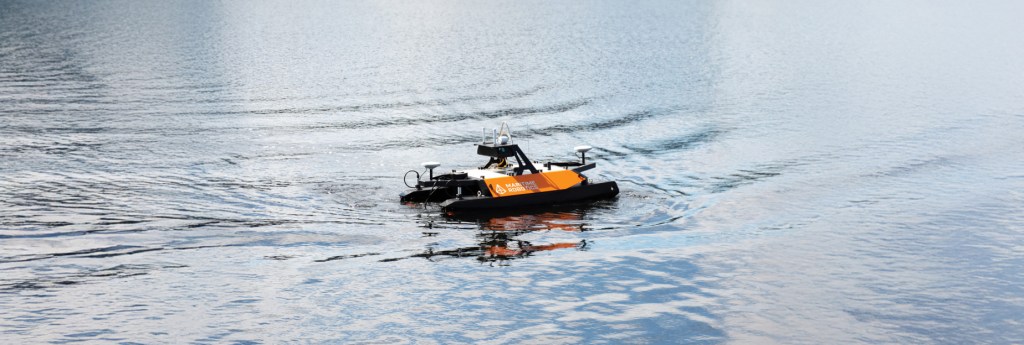
The company’s history is marked by significant milestones, including the commercial availability of their Mariner USV Mk I in 2016, its impressive voyage of over 7,750 nautical miles in 2019, and the subsequent commercial release of the Mariner USV Mk II and Mariner X USV. By 2021, over 80 of their Otter USVs had been sold worldwide, underscoring their growing market presence and the reliability of their systems. Today, with more than a hundred systems operating globally and accumulating thousands of hours in service, Maritime Robotics prides itself on offering one of the market’s most reliable and tested Autonomous Navigation Systems.
Core Technologies: The Autonomous Navigation System (ANS) and USV Platforms
At the heart of Maritime Robotics’ success is its proprietary Autonomous Navigation System (ANS). This advanced system serves as the foundation for all their offerings, enabling safe, efficient, remote, and autonomous operations at sea. The ANS can be deployed in two key ways: as an independent, modular system that can be integrated into third-party vessels, or as a fully integrated component within Maritime Robotics’ own fleet of USVs.

Their product portfolio is centered around a versatile range of Uncrewed Surface Vessels (USVs), each tailored for different missions and environments:
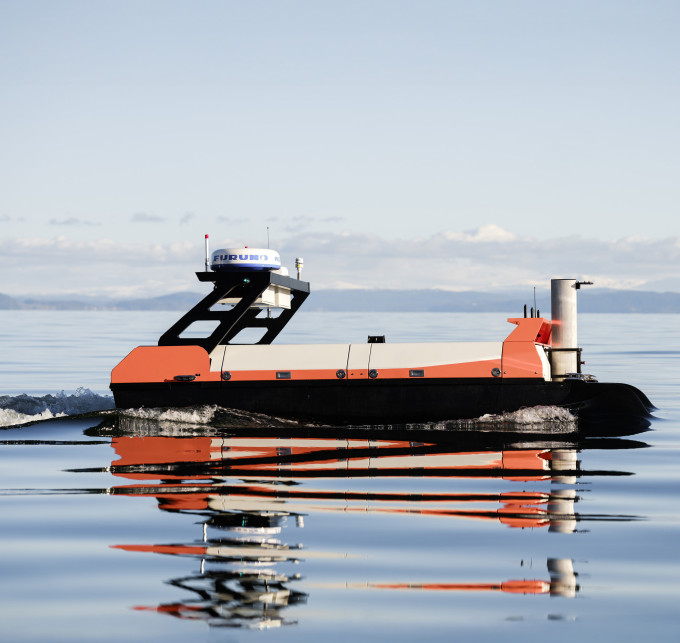
- Mariner USVs (e.g., Mariner X): These are larger, highly versatile USVs constructed from robust materials like high-density polyethylene, enabling them to withstand harsh sea conditions. The Mariner X, for instance, features a customizable back deck capable of carrying over a ton of payload, allowing for long-endurance missions of up to 25 days without refueling. They are designed for demanding offshore operations, offering extended endurance and adaptability.
- Otter USVs: These are smaller, fully electric catamaran USVs, typically 2 meters in length. They are specifically designed for efficient and precise data acquisition in sheltered, coastal, and shallow water areas. The Otter is known for its agility and ease of deployment.
- Customizable Platforms: Maritime Robotics offers a variety of USV platforms that can be configured with diverse payload options to cater to specific marine surveying needs across different environments, from shallow to deep ocean.
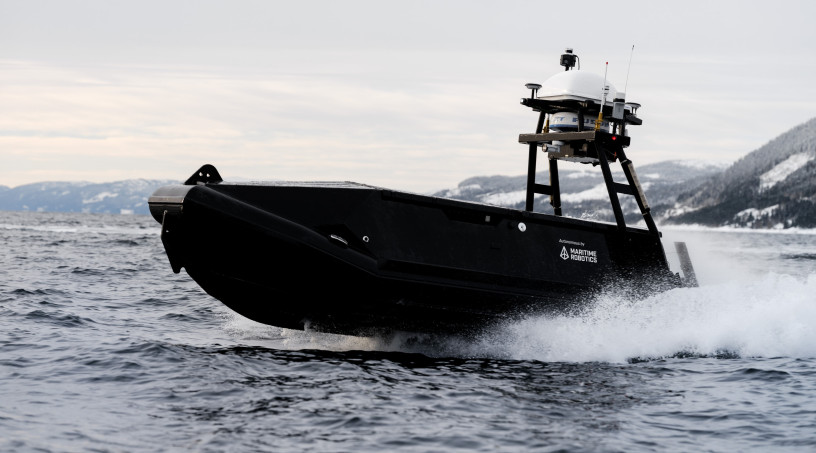
Beyond the physical vessels, Maritime Robotics integrates sophisticated software and systems to ensure comprehensive operational capabilities:
- Vehicle Control System & Remote Control Center: This system provides uninterrupted real-time remote control and monitoring of the USV from anywhere in the world. It delivers up-to-the-minute information, ensuring optimal safety and efficiency for missions.
- SeaControl: A powerful onboard control system that manages all operational aspects of the vessel, from navigation to system diagnostics.
- SeaSight: A 360-degree situational awareness and collision avoidance system, developed in collaboration with leading academic institutions. It utilizes multiple low-light HD cameras, a 360-degree LiDAR scanner, and other sensors to provide real-time detection and assessment of environmental conditions and potential hazards. SeaSight can reliably detect virtually anything that could interfere with safe USV operation, including other vessels, buoys, shorelines, animals, and sea plants, even under poor visibility conditions.
- SeaCapture: A powerful software suite for real-time logging and processing of data from a wide range of USV payloads, including single- and multibeam sonars, LiDAR scanners, navigation systems, and CTD/SVP sensors. It works seamlessly with the USV control station, offering a unified interface for survey planning, payload control, and data acquisition.

Applications: From Marine Science to Defense and Security
The versatility of Maritime Robotics’ USVs and autonomous systems allows for a wide array of applications across multiple industries:
- Marine Mapping and Surveying: Their USVs are extensively used for geophysical survey solutions, supporting various payload configurations for marine surveying across diverse areas, from shallow to deep ocean environments.
- Oceanographic Data Collection: Autonomous survey procedures conducted with USVs offer safer and more efficient data collection, utilizing advanced oceanographic, meteorological, geophysical, or biological sensor packages to elevate the speed, accuracy, and cost-effectiveness of oceanographic research.
- Maritime Surveillance & Inspection: USVs and autonomous navigation systems offer significant operational advantages over traditional methods for maritime surveillance and inspection, enhancing safety, efficiency, and data quality. This includes monitoring critical infrastructure, pipelines, and offshore installations.
- Defense and Security: Maritime Robotics’ solutions have critical defense and security applications. Their USVs can be deployed for maritime domain awareness, intelligence, surveillance, and reconnaissance (ISR). They provide cost-effective platforms for patrolling coastal areas, monitoring maritime traffic, and supporting various naval operations. As reported, data collected by Maritime Robotics’ Otter USV can be instrumental in strengthening national defense and enhancing maritime traffic security, potentially supporting the safety of civilian populations in conflict zones, as seen in contributions to Ukraine’s defense efforts. Their systems minimize human exposure to dangerous environments, making them ideal for mine countermeasures, anti-submarine warfare, and harbor protection.
- Environmental Monitoring: USVs can collect crucial environmental data, aiding in understanding climate change, tracking pollution, and supporting ecosystem restoration efforts.
- Maritime Transportation: Autonomy in maritime transportation, enabled by Maritime Robotics’ systems, has the potential to significantly impact the maritime industry by allowing vessels to operate with varying degrees of independence, enhancing efficiency and potentially reducing crew requirements.
Strategic Partnerships and Future Outlook
Maritime Robotics has forged significant partnerships and secured crucial funding to support its growth and innovation. In September 2024, the company announced a USD 12 million capital raise, co-led by the Nordic cleantech fund NRP Zero and the Norwegian state-owned fund Nysnø Climate Investment, with strong participation from Umoe AS and Holta Invest. This funding is aimed at accelerating international expansion and meeting the increasing demand for autonomous maritime technologies.
The company is also actively involved in collaborative projects, demonstrating its commitment to advancing maritime technology:
- SMAUG Project: As a key partner in the EU-funded SMAUG (Smart Maritime And Underwater Guardian) project, Maritime Robotics is collaborating with 21 other companies to revolutionize underwater threat detection and enhance harbor security. Their contribution includes refining sonar data pipelines and integrating state-of-the-art drone technology for comprehensive maritime domain awareness. This involves integrating tethered UAV systems from companies like Elistair onto their USVs to provide continuous, 24/7 aerial surveillance, complementing underwater data for enhanced situational awareness and threat response.
- Sustainable Manufacturing: Maritime Robotics is committed to a greener future, collaborating with companies like AKVA group Helgeland Plast to manufacture USV hulls using climate-neutral bio-based and recycled materials.
- Industry Collaboration: Their collaboration with leading academic institutions, such as in the development of the SeaSight system, highlights their dedication to leveraging cutting-edge research to drive innovation.
Maritime Robotics’ vision extends to transforming maritime operations by providing innovative, sustainable, and efficient solutions. They are dedicated to redefining maritime operations by enhancing safety, improving operational efficiency, and minimizing environmental impact. By making advanced autonomous technologies accessible and practical for a wide range of maritime applications, Maritime Robotics is poised to set new industry standards and drive a global shift towards more intelligent, autonomous maritime operations. Their robust portfolio of USVs, combined with their advanced ANS and integrated software solutions, positions them as a key enabler of the future of the ocean space.