The Unseen Sentinels of the Sky
In the dynamic and often unpredictable realm of modern defense and security, the ability to maintain persistent aerial surveillance and communication can be the deciding factor between mission success and failure. While the skies are increasingly populated by a myriad of unmanned aerial systems (UAS), one company has carved a unique niche by prioritizing endurance, reliability, and unparalleled data security: Hoverfly Technologies.
Founded in 2010 and initially emerging from the vibrant innovation ecosystem of the University of Central Florida Business Incubation Program, Hoverfly Technologies has grown from a nascent idea into a recognized leader in tethered unmanned aerial systems (TeUAS). Their journey is not one of fleeting commercial trends but a steadfast commitment to delivering robust, persistent aerial solutions for the most demanding environments, particularly within the federal defense, public safety, and critical infrastructure sectors.
The Genesis of Persistence: Beyond Battery Limits
The early days of drone technology were characterized by significant limitations, primarily battery life. Short flight times meant constant landings, battery swaps, and critical gaps in coverage. This fundamental challenge spurred the visionaries at Hoverfly to rethink the very nature of drone operations. What if a drone could stay airborne indefinitely, powered by a ground-based source? This simple yet profound question led to the development of tethered drone technology – a system where power and data are continuously transmitted via a secure physical link to the ground.
This tether, far from being a limitation, became Hoverfly’s distinguishing advantage. It liberated their systems from the constraints of finite battery life, enabling continuous surveillance, communication extension, and intelligence, surveillance, and reconnaissance (ISR) capabilities for hours, days, even weeks at a time. This paradigm shift was a game-changer, especially for defense applications where uninterrupted situational awareness is paramount.
Forging Iron in the Fire: Early Challenges and Growth
Like any pioneering startup, Hoverfly faced its share of challenges. Developing a robust, reliable tether system capable of withstanding diverse environmental conditions and managing power and data flow securely was a complex engineering feat. It required a deep understanding of aerodynamics, material science, software development, and network security. Their initial focus on creating advanced flight controllers laid the groundwork for their eventual mastery of full tethered drone systems.
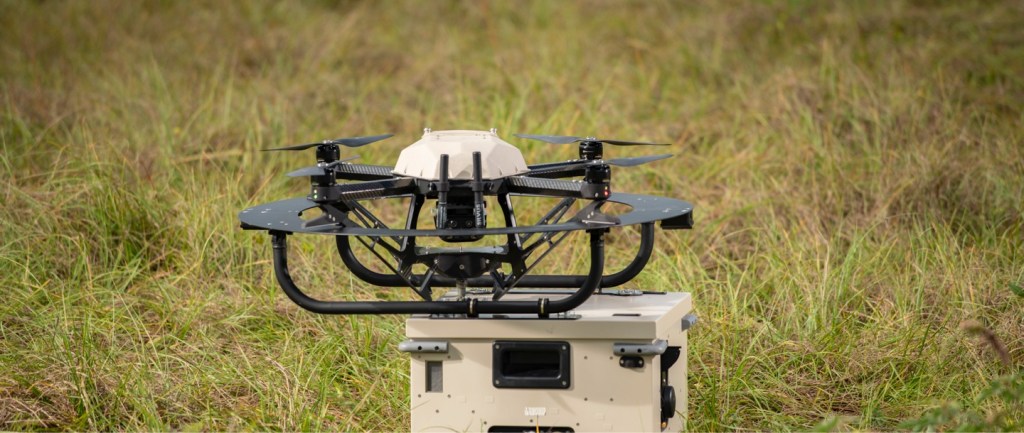
Crucially, Hoverfly understood that for their technology to be truly valuable in the defense sector, it needed to meet stringent requirements for reliability, ruggedization, and compliance. This led to a relentless pursuit of certifications and partnerships that would validate their innovation. Their early engagement with the U.S. government, including securing significant contracts for their LiveSky™ tethered UAS, demonstrated their commitment to meeting the rigorous demands of military operations. These early successes were not merely financial milestones; they were endorsements of their technical prowess and the operational utility of their unique approach.
The Spectre and Sentry: Blue List, Green List, and Battlefield Trust
Hoverfly’s product line, particularly the Spectre and Sentry TeUAS, stands as a testament to their dedication to the defense mission. These systems are not just drones; they are sophisticated aerial platforms designed to extend the eyes and ears of military personnel in complex and contested environments.
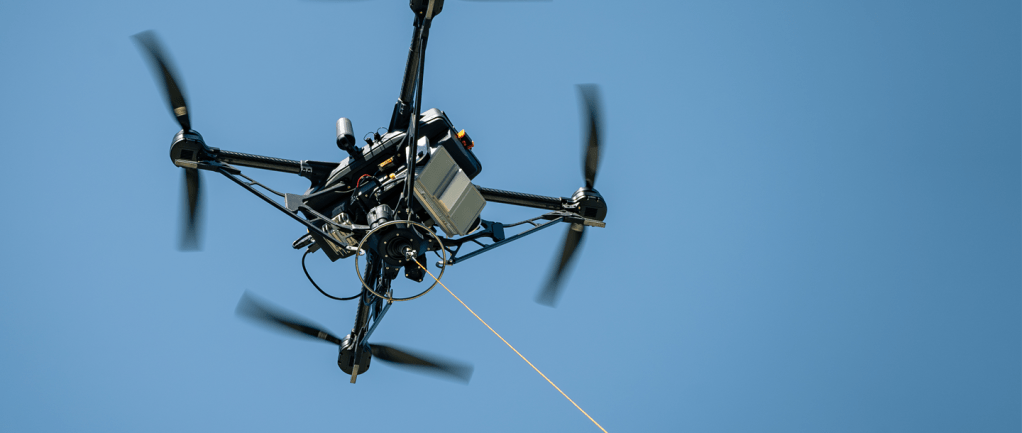
The Spectre, in particular, has achieved a remarkable feat by being the first and only tethered UAS to be officially added to the DIU Blue List. This designation is critical for defense acquisition, as it confirms compliance with the National Defense Authorization Act (NDAA) and simplifies the procurement process for all Department of Defense (DoD) entities. This achievement underscores Hoverfly’s commitment to secure, American-made technology, a crucial factor in national security. The Spectre’s ability to seamlessly integrate various intelligence, surveillance, and reconnaissance (ISR) and Variable Height Antenna (VHA) payloads, combined with its GPS-denied operation capabilities, makes it an indispensable asset for diverse mission requirements.
Similarly, the Sentry TeUAS has gained significant traction, most recently with its successful delivery for trials and evaluation by the Australian Defence Force (ADF) in 2025. This international expansion highlights the global recognition of Hoverfly’s persistent aerial solutions. The Sentry’s versatility, offering continuous aerial surveillance, communication network range extension, and even counter-UAS (C-UAS) capabilities, proves its adaptability across various operational scenarios. Its “payload agnostic” design allows for the integration of a wide range of military-grade sensors and radios, offering flexibility to adapt to evolving threats and mission objectives.
Beyond the Battlefield: A Multifaceted Impact
While defense remains a core focus, Hoverfly’s tethered drone technology has found applications in a broader spectrum of critical sectors. Public safety agencies, for instance, leverage Hoverfly systems for enhanced situational awareness during emergency response, law enforcement operations, and large-scale event security. Imagine a continuous aerial overview of a disaster zone, providing real-time intelligence to first responders, or a persistent eye on a crowded public gathering, enhancing security and crowd control.
Furthermore, the robust and reliable nature of Hoverfly’s systems has extended to critical infrastructure protection and industrial monitoring. Whether it’s overseeing expansive industrial sites, securing borders, or providing persistent communication links in remote areas, the ability to maintain an unbroken aerial presence offers significant operational advantages.
The Human Element: People Behind the Persistence
Behind the innovative technology at Hoverfly is a team driven by expertise and dedication. A significant portion of their engineering talent hails from the University of Central Florida, showcasing a strong connection to academic innovation and a pipeline of skilled professionals. Leaders like Steve Walters, CEO, and Steve Topping, COO, bring a wealth of experience, including military backgrounds, which deeply informs their understanding of the defense sector’s needs and challenges.
The company’s growth, including the expansion into a new 20,000 sq. ft. facility in Sanford, Florida, reflects not just increasing demand for their products but also a commitment to scaling their operations and fostering an environment of continuous innovation. Their focus on building a robust, American-based supply chain and achieving Green List Certification further demonstrates their dedication to national security and resilience.
The Future on a Leash: Sustained Innovation
Hoverfly Technologies continues to push the boundaries of tethered UAS technology. Recent developments, such as the launch of HIVE – a new suite of turnkey solutions built around their TeUAS – and strategic partnerships, including one with BlueHalo for integrating passive RF sensing solutions for enhanced C-UAS operations, indicate a clear trajectory of sustained innovation. These collaborations aim to bring even more advanced capabilities to the modern battlefield, from electronic warfare to advanced targeting.
In a world where threats are constantly evolving and the need for persistent, secure, and reliable aerial intelligence is ever-increasing, Hoverfly Technologies stands as a crucial player. Their story is one of identifying a fundamental limitation in existing technology, devising an elegant and effective solution, and tirelessly working to meet the stringent demands of the defense and security sectors. The “unseen sentinels” of Hoverfly, tethered to the ground yet soaring above, represent a vital advancement in maintaining awareness, extending communication, and ultimately, enhancing safety and security in a complex world. They are not just building drones; they are building the future of persistent aerial presence.