
Pioneering the Small Satellite Revolution for a Secure World
In the vast and increasingly critical domain of space, where the cost and complexity of traditional satellites once restricted access to a select few, a quiet revolution has been unfolding. At the forefront of this transformation, democratizing access to orbit and unlocking unprecedented capabilities, stands GomSpace. From its humble beginnings as a university spin-off in Denmark, GomSpace has not only miniaturized the marvel of space technology but has also made it accessible, affordable, and profoundly useful for a diverse array of clients, including those operating at the sharp end of national security and defence.
GomSpace is more than just a manufacturer of small satellites; it is an innovator, an enabler, and a strategic partner, building the eyes and ears in orbit that contribute to a more secure and interconnected world. Their journey is a testament to the power of audacious vision, relentless engineering, and the conviction that even the smallest components can yield immense strategic advantage.
From “Grumpy Old Men” to Space Pioneers (2007-2013)
The story of GomSpace begins in 2007, not in a gleaming corporate campus, but in the academic halls of Aalborg University in Denmark. It was here that a group of PhD students, with their critical, enthusiastic, and analytical approach to technology, earned themselves the affectionate nickname “Grumpy Old Men” (GOM), a moniker that would later form the genesis of the company’s name. Their dream, ambitious yet simple, was to put something into space.
At a time when satellites were synonymous with colossal size, multi-billion-dollar budgets, and decades-long development cycles, these founders recognized the nascent potential of nanosatellites – specifically, the CubeSat standard. This standardized, modular approach, based on units (U) of 10x10x10 cm cubes, promised to drastically reduce the cost and time associated with space missions. GomSpace was established at the Novi Science Park, initially focusing on research-related projects primarily for academic and scientific customers.
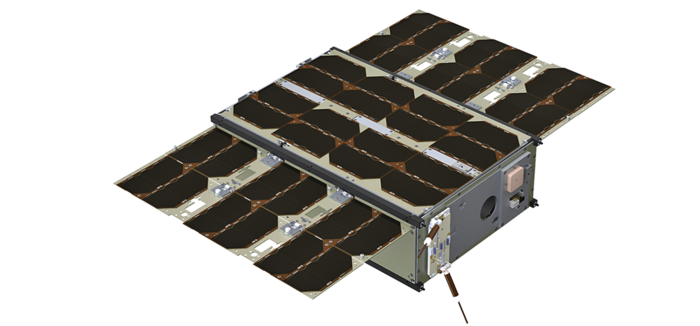
Their early work was foundational, contributing to the very backbone of what would become the thriving nanosatellite industry. They honed their expertise in miniaturized radio technology, robust command and data handling systems, and compact power solutions – the critical components that would enable these small wonders to function reliably in the harsh vacuum of space.
A pivotal moment arrived in January 2013 with the launch of their first mission: GOMX-1. This experimental 2U nanosatellite, launched aboard a Dnepr rocket, carried a primary objective to demonstrate aircraft tracking from space based on the reception of ADS-B signals. This successful mission was a powerful validation of their technology and approach, proving that small satellites could deliver valuable, real-world capabilities. By this point, GomSpace had grown to 10 employees, already serving customers in 30 countries – a testament to the early global recognition of their specialized expertise.
Strategic Shift and Rapid Expansion (2014-2017)
The success of GOMX-1 and the growing awareness of nanosatellites’ commercial opportunities spurred a significant shift in GomSpace’s strategy. From 2014 onwards, the company began to pivot, recognizing the immense potential beyond academia. They consciously embraced the commercial markets for nanosatellites, integrating this new focus into their organizational structure and business development efforts. This strategic pivot was crucial, as it allowed GomSpace to mature from a research-oriented entity into a professional, market-driven enterprise.
The period between 2014 and 2017 was marked by rapid expansion and key milestones. The company demonstrated advanced capabilities, including X-band downlink for high-speed data transmission, second-generation air traffic receivers, and sophisticated software-defined radio techniques.

A major corporate event occurred in June 2016 when GomSpace was listed on Nasdaq in Sweden (GOMX), a significant step that provided the capital necessary for accelerated growth and further research and development. This public listing underscored the market’s confidence in the future of small satellites and GomSpace’s leading position within it.
Further enhancing their product portfolio, in October 2016, GomSpace acquired NanoSpace AB, a Swedish company specializing in propulsion systems for small satellites. Propulsion is critical for precise orbital maneuvering, constellation deployment, and extending satellite lifetimes, making NanoSpace a central addition to GomSpace’s end-to-end solutions. By February 2017, the GomSpace Group boasted over 80 employees and customers in more than 50 countries, illustrating their burgeoning global footprint.
International expansion became a clear priority. In May 2017, GomSpace opened its first office in Singapore, aiming to spearhead activities in the rapidly growing Asian market. This was swiftly followed by the opening of a North American office in Washington D.C. in June 2017, strategically positioning them to engage with the significant US defence and commercial space sectors. Concurrently, their headquarters in Aalborg, Denmark, moved to new, larger facilities, accommodating the expanding team and increased production demands.
Enabling the Constellation Age: Key Missions and Defence Capabilities (2017-Present)
As the concept of satellite constellations – swarms of interconnected small satellites working in unison – gained traction, GomSpace found itself at the forefront of this new era. These constellations promised continuous global coverage for communication, Earth observation, and intelligence gathering, areas of immense interest to government and defence clients.
One significant development was the partnership between GomSpace and the Ministry of Economy in Luxembourg in July 2017. This collaboration aimed to establish a business unit focused on the operations of satellite constellations, data processing, and distribution as a service. This initiative, with an intention to grow to 50 full-time employees by 2021, solidified GomSpace’s move beyond just hardware provision to offering comprehensive space-as-a-service solutions. For defence customers, this meant not just buying satellites, but leveraging a full operational capability.
A landmark mission, further showcasing GomSpace’s capabilities in multi-satellite operations, was the GOMX-4 mission in February 2018. This involved the launch of two nanosatellites flying in tandem, with project partners including DTU (Technical University of Denmark), the Danish Defence, and the European Space Agency (ESA). GOMX-4 demonstrated inter-satellite links, precise formation flying, and advanced radio applications, proving the viability of small satellite constellations for complex missions. This was a direct demonstration of how GomSpace’s technology could enable resilient and distributed space architectures vital for defence and intelligence.
The company’s involvement in deep space missions further highlights their engineering prowess. In January 2019, GomSpace and ESA signed a contract to develop Juventas, a 6U nanosatellite that would join ESA’s HERA mission to a binary asteroid system. Launched in October 2024, Juventas carries a low-frequency radar (JuRa) to probe the interior of the Didymoon asteroid and is designed to attempt a daring landing on its surface. This mission, focusing on planetary defence, demonstrates GomSpace’s ability to build incredibly robust and precise small satellites capable of operating far beyond Earth orbit, pushing the boundaries of what CubeSats can achieve. This directly translates into advanced capabilities for governmental space-based defence initiatives, such as space domain awareness and future threat mitigation.
More recently, in April 2025, GomSpace announced its participation in ESA’s RAMSES mission (Rapid Apophis Mission for Space Safety), another planetary defence initiative to study the near-Earth asteroid 99942 Apophis during its close approach to Earth in 2029. GomSpace is providing system engineering support for one of the CubeSats in this collaborative mission, reinforcing their deep space expertise and contribution to safeguarding Earth.
Defence and Security: Tailored Solutions for Critical Needs
GomSpace’s commitment to the defence sector is a core pillar of its strategy. Their website explicitly outlines their offerings for military, intelligence, and security clients, built on tested and well-proven platforms and architectures. The inherent advantages of nanosatellites – their relatively low cost, rapid deployment, and potential for redundancy through constellations – make them ideal for modern defence applications.
For defence and security, GomSpace provides solutions in several key areas:
- Tracking: Global tracking of assets, personnel, and potential threats is essential. GomSpace’s small satellites, especially in constellations, can provide persistent surveillance and tracking capabilities over vast areas, including remote or denied zones.
- Internet of Things (IoT): The defence sector increasingly relies on interconnected sensors and devices across the battlefield. GomSpace enables space-based IoT connectivity, allowing for the collection of data from dispersed ground, sea, and air assets, feeding critical intelligence back to command centers.
- Communications: Secure, resilient, and low-latency communication is vital for command and control. GomSpace offers robust communication systems for inter-satellite links (ISL) and global communication, ensuring that defence forces maintain connectivity even in challenging electromagnetic environments. Their solutions incorporate strong data encryption and other cybersecurity measures, crucial for protecting sensitive military communications.
- Remote Sensing: Small satellites equipped with specialized sensors can provide valuable remote sensing data for intelligence gathering, situational awareness, and environmental monitoring relevant to defence operations.
- Additional Resilience (ECCM): GomSpace builds Electronic Counter-Countermeasures (ECCM) into their solutions to cope with adversary actions, ensuring their satellites can operate effectively even when faced with jamming or interference.
- Integration into C4ISR Infrastructures: Understanding that new space-based capabilities must seamlessly integrate with existing Command, Control, Communications, Computers, Intelligence, Surveillance, and Reconnaissance (C4ISR) systems, GomSpace provides the expertise to bridge these domains, ensuring that their satellite data and services enhance, rather than complicate, existing defence frameworks.
A very recent announcement (June 2025) further underscores their growing impact: GomSpace signed a €19.5 million contract with a European-based company to deliver 18 satellites within 12 months for a proof-of-concept and early service verification mission. While the customer is not explicitly named as a defence entity, the nature of a rapid, large-scale constellation deployment leveraging GomSpace’s “standardized satellite platform, which benefits from extensive flight heritage and a modular design,” strongly aligns with governmental and defence needs for rapid capability acquisition. CEO Carsten Drachmann emphasized that GomSpace’s “technology heritage, customer mission focus, world-class team, and scalable manufacturing capabilities were decisive factors,” positioning the company to “accelerate global expansion—particularly within government and defense sectors.” This strategic move also saw GomSpace undertake early procurement of components to ensure timely delivery, showcasing a proactive approach to meet demanding timelines – a common requirement in defence projects.
Operational Excellence and Financial Strength
GomSpace’s transformation has been supported by a focus on operational maturity. Their state-of-the-art production facilities in Aalborg are designed for scalable, high-volume manufacturing of satellites, ensuring cost-efficiency and reliability. The company’s commitment to in-orbit validation through its GOMX flight test program means that their products are not just theoretically sound but are proven to perform in the unforgiving environment of space.
Financially, GomSpace has shown resilience and a renewed positive momentum. In Q1 2025, the company reported a positive net profit and strong operational EBITDA for the first time in years, alongside significant revenue growth and increased order intake. This positive financial trajectory, bolstered by a strategic investment of 196 MSEK (approximately €17.5 million) from its main shareholder in March 2025, further strengthens its balance sheet and enables acceleration of global expansion, particularly within the government and defence sectors. This financial stability is crucial for long-term engagements in the defence industry, where continuity and reliability are paramount.
The Future Orbit: Towards a More Connected and Secure Planet
As the space domain becomes increasingly contested and integrated into global security strategies, GomSpace stands poised to play an even more critical role. The future of defence will rely heavily on resilient, distributed, and intelligent space assets. GomSpace’s expertise in small satellite constellations, secure communications, and advanced payload integration makes them a vital enabler for concepts like Space Domain Awareness (SDA), persistent global surveillance, and rapid responsiveness to emerging threats.
Their continuous investment in research and development, particularly in areas like advanced radio technology, propulsion systems, and software-defined missions, ensures they remain at the cutting edge. The commitment to making space “accessible, affordable, and useful” resonates profoundly with defence organizations seeking cost-effective, rapidly deployable solutions that augment traditional, larger space assets.
GomSpace’s journey from a university project to a Nasdaq-listed, global leader in small satellite solutions is a compelling narrative of innovation, strategic adaptation, and unwavering dedication. By putting advanced capabilities within reach, they are not only democratizing space but are also providing critical tools for national security, enabling defence forces to operate with enhanced awareness, superior communication, and unprecedented agility in a rapidly evolving world. Their story is a powerful illustration of how the ingenuity of small and medium-sized enterprises can profoundly shape the future of defence, one small satellite at a time.