Connecting the Unconnected – A Micro-Satellite Revolution for Global Security
In an increasingly interconnected world, there remain vast swathes of the planet – remote oceans, expansive wildernesses, and even critical industrial zones – where traditional terrestrial communication networks simply cannot reach. Yet, the demand for real-time data from assets deployed in these “dark zones” has never been greater, particularly for applications critical to national security, logistics, and infrastructure management. It is into this connectivity gap that Fossa Systems has rapidly emerged, a Spanish NewSpace pioneer democratizing access to space-based Internet of Things (IoT) solutions through its innovative constellation of pico- and nanosatellites.
Fossa Systems is more than a satellite operator; it is an end-to-end provider of global IoT connectivity, designing, developing, integrating, and operating its own constellation to ensure seamless information flow from remote devices to end-users. Their story is one of audacious vision, rapid execution, and a profound commitment to providing ubiquitous, secure, and cost-effective data solutions that are increasingly vital for both commercial resilience and defence readiness.
The Audacious Beginning: Democratizing Space
The genesis of Fossa Systems can be traced back to 2018, when it was founded by a remarkably young and ambitious team led by Julian Fernandez (CEO) and Vicente Gonzalez Negro (CTO), alongside Richard Bamford and other co-founders. Their initial driving force was a passion for democratizing access to space, believing that miniaturized satellite technology could unlock unprecedented possibilities for global connectivity. At a time when traditional satellites were still massive, costly, and slow to deploy, Fossa recognized the disruptive potential of pico-satellites (satellites weighing under 1 kg, often adhering to the PocketQube standard) and nanosatellites (CubeSats).
The early days were marked by intense development and a lean, agile approach. The goal was to drastically reduce the cost and complexity associated with putting assets into orbit, thereby enabling low-power IoT devices to communicate directly with space-based infrastructure. This focus on “low-power, wide-area network” (LPWAN) technologies, particularly LoRa (Long Range) communication, became a cornerstone of their strategy. LoRa, typically used for terrestrial IoT, offered significant advantages in terms of energy efficiency and signal penetration, making it ideal for direct-to-satellite communication from small, battery-powered sensors.

A significant early milestone came in December 2019 with the launch of their very first satellite, FOSSASat-1. This pioneering 1P (PocketQube unit) satellite, weighing under 250 grams, was launched aboard a Rocket Lab Electron vehicle. FOSSASat-1 was a crucial demonstrator of LoRa technology for ground-to-space IoT communications, proving that even a tiny satellite could establish a viable link and transmit data from Earth. This achievement, at a time when Julian Fernandez was still a teenager, immediately put Fossa Systems on the global NewSpace map, showcasing their technical prowess and the viability of their vision.
The official commercial entity, Fossa Systems S.L., was formally established in July 2020 in Madrid, Spain, building upon the success of FOSSASat-1 and the growing interest in their capabilities.
Rapid Constellation Deployment: From Experiment to Ecosystem
Following their foundational success, Fossa Systems embarked on an ambitious journey to deploy a full constellation, moving from experimental launches to building an operational network.
While their second attempt with FOSSASat-1b and FOSSASat-2 on FireFly’s Alpha launcher in September 2021 faced a launch failure, Fossa’s resilience was evident. They quickly pivoted, demonstrating their agile development and launch strategy. In July 2021, they signed a crucial agreement with Exolaunch for the launch of eight PocketQube satellites onboard a SpaceX Falcon 9.
This partnership bore fruit in January 2022 with the successful launch of six FOSSASat-2E pico-satellites (including WISeSAT-1 and WISeSAT-2, developed in cooperation with WISeKey) on SpaceX’s Transporter-3 mission. This was a pivotal moment, marking the beginning of their operational constellation and making Fossa Systems the European company that launched the most smallsats in 2022. These satellites were designed to provide vertically integrated low-power IoT connectivity for remote asset monitoring.
By May 2022, Fossa launched another eight satellites, although a subsequent space tug failure meant seven of these were unfortunately stuck. Nevertheless, Fossa continued its rapid deployment pace. The company’s strategy involved frequent, cost-effective launches, often utilizing rideshare opportunities on major launchers like SpaceX’s Falcon 9. This iterative approach allowed them to continuously improve their satellite design, ground infrastructure, and software capabilities.
By 2023, Fossa Systems had successfully launched 17 of its own development satellites and was well on its way to deploying a constellation of 80 satellites in Low Earth Orbit (LEO) with the ambitious goal of connecting millions of devices directly to its network, offering global and real-time LPWAN coverage. Their satellite design encompasses full lifecycle capabilities, from design and in-house manufacturing to testing and operation.

Vertical Integration and End-to-End Solutions
A key differentiator for Fossa Systems is its commitment to vertical integration. Unlike many NewSpace companies that specialize in only one part of the space value chain, Fossa designs, develops, integrates, and operates its entire ecosystem:
- Satellite Constellations: They custom-design and manufacture their pico- and nanosatellite platforms (e.g., FOSSASat-2E series, and the new generation FOSSASat TAT series). Their expertise extends to developing specialized payloads for IoT, SIGINT (Signals Intelligence), or IoD (In-orbit Demonstration) missions.
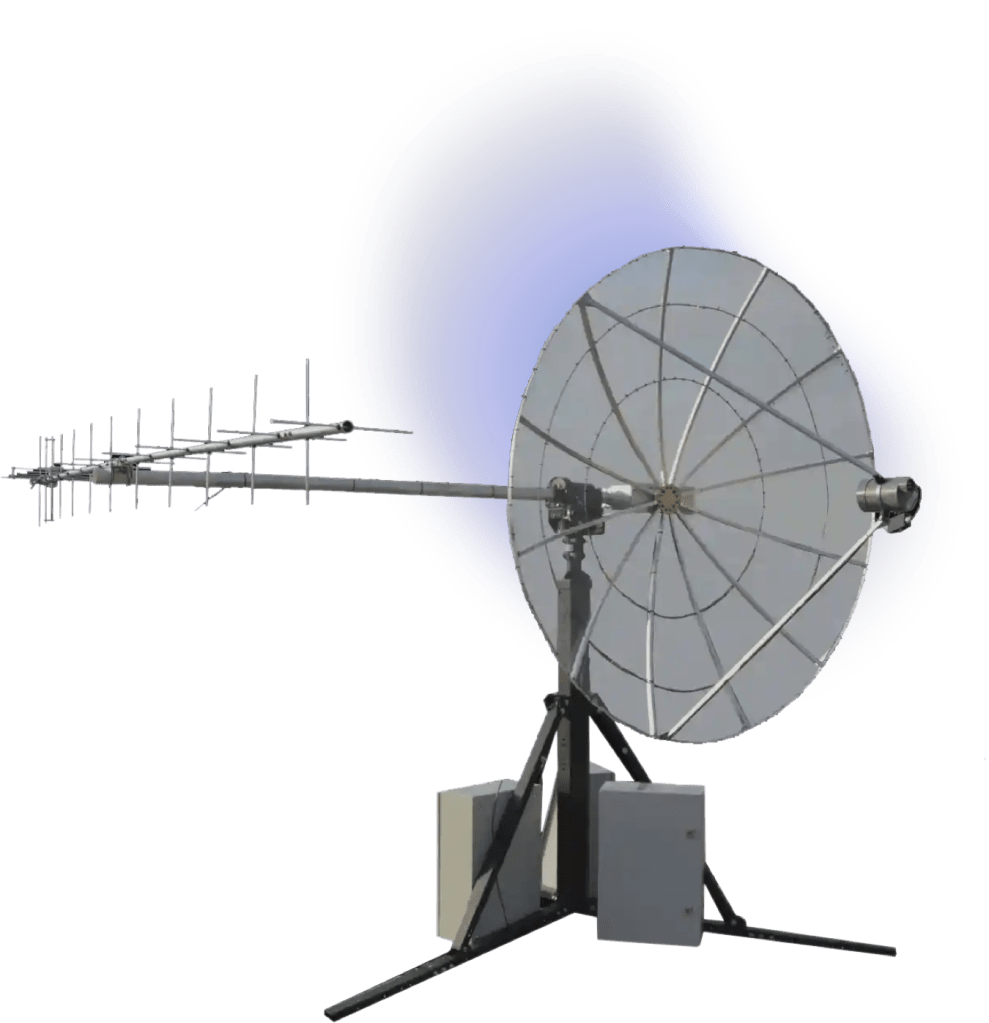
- Ground Segment: They develop and operate their own ground stations, supporting UHF and S-Band communications, which are crucial for reliable data uplink and downlink from their constellation.
- IoT Devices and Payloads: Fossa focuses on creating low-power, wide-area IoT devices optimized for satellite connectivity. They also integrate various RF payloads onto their satellites to serve different customer needs.
- Management Platform: Fossa provides a comprehensive management platform for clients to access and manage their IoT data. This includes an API for seamless integration with customers’ existing applications and IoT processing tools, transforming raw data into actionable insights.
- Consulting & Engineering: Beyond hardware and connectivity, Fossa offers expert consulting and engineering services, guiding clients through the complexities of satellite IoT deployment and integration.
This end-to-end approach ensures seamless functionality, enhanced security, and simplified deployment for customers, allowing Fossa to offer a complete “360° SatIoT Solution.” Their focus on LoRa and LPWAN technologies ensures that even very small, battery-powered devices in remote locations can reliably send data to their satellites, bypassing the limitations of cellular or terrestrial networks.
Fueling Growth: Funding and Strategic Expansion
Fossa Systems’ rapid progress attracted significant investor interest. In November 2023, the company closed a Seed funding round, which included investments from Nabtesco Technology Ventures and WISeKey (who had previously collaborated on the WISeSAT satellites). This was followed by a substantial Series A funding round in June 2024, raising $6.8 million. This round was led by Indico Capital Partners and Nabtesco Technology Ventures, with participation from Sabadell Venture Capital and Emerald Technology Ventures, among others. The funding was crucial for accelerating the deployment of their constellation and expanding their global presence.
International expansion became a strategic priority. In April 2024, Fossa Systems opened its first international subsidiary in Portugal. This R&D and innovation delegation was established to tap into Portugal’s growing space sector, foster new business opportunities, and forge academic collaborations. This move underscored Fossa’s ambition to increase its international presence and serve new markets directly.
In January 2025, Fossa continued its aggressive launch schedule with the successful deployment of the new generation FOSSASat TAT-A, TAT-E, and TAT-O satellites on SpaceX’s Transporter-12 mission. These latest satellites further enhance their constellation’s capabilities, reinforcing their commitment to providing advanced, reliable, and secure global IoT connectivity. These three satellites were commissioned and declared operational shortly after launch, highlighting the efficiency of Fossa’s operational processes.
Defence and National Security: Critical Applications of Satellite IoT
While Fossa Systems serves diverse commercial sectors (Smart Farming, Logistics, Oil & Gas, Energy & Utilities), its unique capabilities in satellite IoT make it an increasingly vital player in National Security & Defence. The ability to collect data from any point on the globe, regardless of existing infrastructure, holds immense strategic value for military and intelligence operations.
Fossa’s solutions directly address several critical defence needs:
- Internet of Battlefield Things (IoBT): Modern warfare is evolving towards highly connected battlefields where every asset – vehicles, personnel, sensors, and critical infrastructure – needs to be monitored in real-time. Fossa’s satellite IoT network enables seamless connectivity for these dispersed assets, providing vital information on vehicle position, speed, and status (e.g., via OBD-II), soldier/weapon position and status, and the health of critical equipment. This contributes to enhanced situational awareness and supports agile decision-making.
- Critical Asset Monitoring: Defence organizations manage vast networks of critical infrastructure, both domestically and abroad. Fossa’s solutions allow for remote, continuous monitoring of national utilities, sensitive facilities, and deployed assets, providing early warnings of anomalies, potential threats, or operational issues.
- Digital Understanding and Twin of the Battlefield Environment: By collecting data from a multitude of sensors, Fossa’s system can help create a comprehensive digital twin of the battlefield, offering an unprecedented level of real-time understanding of operational environments, including terrain, weather, and adversary movements.
- Signals Intelligence (SIGINT): Fossa offers specialized payloads for SIGINT missions. Their distributed LEO satellite networks provide higher temporal resolution for the detection, identification, and localization of electromagnetic signals. This capability is crucial for measuring noise levels in areas of interest, detecting jamming efforts by adversaries, and performing signal geolocation (with precision estimated between 100 to 500 meters) across global and multiband frequencies (VHF to C-Band). This provides critical intelligence for electronic warfare and spectrum management.
- Tactical & Emergency Communications: In environments where conventional communication infrastructure is compromised or unavailable, Fossa’s satellites can establish robust, point-to-point communications. Their “store-and-forward” capabilities allow data (voice, video, and telemetry) to be transmitted reliably for units operating beyond line of sight or in degraded environments. They provide secure, low-power communication links with high tolerance to noise due to spread spectrum technology, ensuring resilient communication pathways in highly contested areas.
- Position, Navigation, and Timing (PNT): Beyond basic tracking, Fossa’s systems can provide high-precision time synchronization (1-10ns) and complement traditional GNSS signals. This ensures operational capability in environments where GPS might be jammed or degraded, offering a crucial augmentation for critical asset time synchronization and reliable navigation.
The inherent low energy consumption and high tolerance to noise provided by their LPWAN and spread spectrum technologies are particularly advantageous for defence applications, where stealth and resilience against interference are paramount.
The Future Orbit: Ubiquitous Connectivity for a Dynamic World
Fossa Systems is actively building towards a future where ubiquitous, secure, and affordable IoT connectivity from space is a reality. Their ongoing deployment of an 80-satellite constellation is a major step towards this goal, promising to enable millions of devices to connect directly to their network. The company continues to invest in R&D, focusing on advancements in satellite technology, ground segment optimization, and expanding their range of IoT applications.
Their focus on standards-based, interoperable connectivity using LoRa technology means that existing terrestrial IoT devices can often be easily integrated into their satellite network, reducing the barrier to entry for businesses and government agencies alike. This seamless integration ensures that customers can leverage their current investments while extending their reach globally.
Fossa Systems’ journey epitomizes the agility and disruptive potential of NewSpace SMEs. From humble beginnings with a single pico-satellite, they have rapidly scaled into a significant player in the global satellite IoT market, directly addressing the critical need for comprehensive remote asset management and secure, resilient communications. By providing the eyes and ears in orbit for the Internet of Battlefield Things and beyond, Fossa Systems is not just connecting devices; it is empowering defence and security forces with unprecedented awareness and control, ensuring that in a rapidly evolving world, no critical asset remains disconnected or unseen. Their story is a powerful testament to how innovative small companies are fundamentally reshaping the capabilities available for global security.