Pioneering Long-Range UAV Solutions for a Safer World
In the rapidly expanding domain of Unmanned Aerial Systems (UAS), where the sky itself becomes a stage for innovation, the French company Boreal SAS stands out as a quietly impactful force. Since its founding in 1998, Boreal has evolved into a leading specialist in long-range fixed-wing UAVs, designing and operating robust, field-proven systems that carry tailored payloads for a diverse array of missions. From environmental monitoring and scientific research to critical intelligence, surveillance, and reconnaissance (ISR) operations for defense, Boreal’s journey is one of consistent technological advancement and a deep commitment to operational efficacy.
A Legacy of Endurance and Precision
Boreal SAS, based in Castanet-Tolosan, France, has built its reputation on developing Unmanned Aerial Vehicles (UAVs) capable of extended flight durations and significant range. Unlike many drone manufacturers focusing on short-range or rotary-wing solutions, Boreal specialized early on in fixed-wing platforms designed for “beyond visual line of sight” (BVLOS) missions, pushing the boundaries of what small and medium-sized drones could achieve.
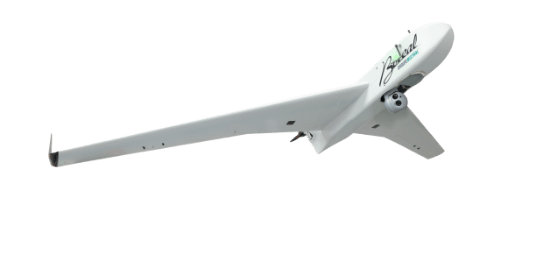
The company’s flagship product, simply named the BOREAL UAV, is a testament to this philosophy. Weighing less than 25 kg (55 lbs) at maximum take-off, this versatile platform boasts a wingspan of 4.2 meters (165 inches) and is powered by a gasoline engine. These specifications allow the BOREAL to achieve remarkable endurance, capable of traveling up to 800-1000 km (540 nautical miles) during a single flight, with reported flight times of 8 to 10 hours. It operates at a cruising speed between 70 to 130 km/h (38 to 70 knots) and can reach altitudes of up to 3,000 meters (10,000 feet).
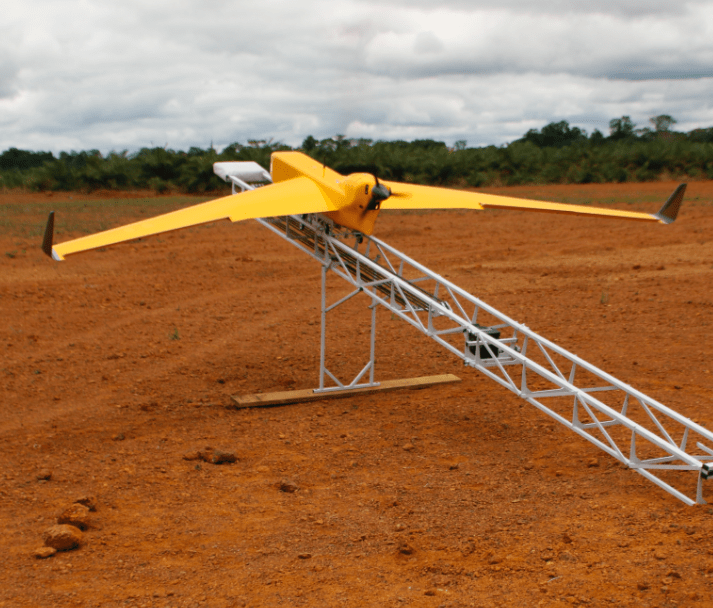
What truly sets the BOREAL apart is its impressive payload capacity relative to its size and its exceptional flight stability. It can carry payloads of up to 5 kg (11 lbs) within a dedicated volume, with automated side-opening hatches and fastening rails for secure integration. This makes it particularly well-suited for demanding applications requiring bulky or sensitive equipment, such as high-definition gimbal cameras for surveillance, LiDAR scanners for precision mapping, or specialized scientific sensors. The drone is launched via a bungee catapult, allowing for quick deployment in various terrains, and recovers through a short-range belly landing, simplifying field operations.
Diverse Applications: From Science to Security
Boreal’s UAV systems have found extensive application across various sectors, demonstrating their adaptability and reliability.

Scientific and Environmental Monitoring: Boreal has a long history of collaboration with prominent scientific institutions, including the CEA (French Alternative Energies and Atomic Energy Commission), ONERA (French Aerospace Research Center), and Météo-France’s Centre National de Recherches Météorologiques (CNRM). These partnerships highlight the BOREAL’s utility in rigorous research environments. For instance, during the MIRIAD and RENOVRISK campaigns in the Indian Ocean, the BOREAL UAV was successfully deployed to probe the marine boundary layer, collecting crucial data on air-sea exchanges. Its payload could include multi-hole 3D wind and turbulence probes, particle counters, altimetry radars for wave height, sea surface temperature sensors, and broadband solar radiation meters. This ability to carry and precisely operate experimental payloads in challenging airspaces has made Boreal a reference in scientific UAVs.
Maritime and Land Surveillance: Given its long endurance and range, the BOREAL system is highly relevant for extensive surveillance missions. It has been successfully employed for maritime surveillance, monitoring vast ocean areas for illegal activities, border security, and search and rescue operations. Its ability to operate beyond the range of traditional ground radio systems, leveraging satellite communication (SATCOM) links, significantly extends its operational reach, enabling surveillance up to 300 km from the starting point. This capability offers a cost-effective and low-risk alternative to manned aircraft or helicopters for persistent observation.
On land, the BOREAL is used for monitoring large areas such as forests and deserts, providing critical data for environmental assessment, crisis management support, and land security. Its high-resolution cameras and stable flight platform ensure quality data acquisition for mapping, infrastructure inspection, and general reconnaissance.
Defense and Security: In the defense sector, Boreal’s expertise in long-range ISR (Intelligence, Surveillance, and Reconnaissance) is particularly valuable. The BOREAL ISR variant is designed for military support missions, offering real-time observation capabilities with high-end optronic cameras. The integration of a TSO-certified Mode S transponder has allowed Boreal drones to operate safely within international airspace, a significant achievement for a fixed-wing drone under 25 kg. This capability is crucial for interoperability and integration into complex air traffic environments.
A recent, highly significant development for Boreal in the defense sphere is its partnership with Thales to produce long-range loitering munitions (MTO-LP1). Announced in June 2025, this cooperation aims to strengthen France’s defense industrial and technological base by developing a comprehensive range of sovereign French loitering munitions. The MTO-LP1 will meet the operational requirements of France and NATO forces, offering range capabilities of several hundred kilometers. Designed for easy deployment by two operators in under 30 minutes, this munition is optimized for long-range target engagements, demonstrating Boreal’s ability to adapt its core UAV technology to advanced offensive capabilities. Initial flight tests for the MTO-LP are scheduled for the summer of 2025, with an initial operational capability expected in 2026. This collaboration underscores Boreal’s growing importance in providing cutting-edge, sovereign defense solutions.
Technological Edge and Operational Flexibility
Boreal’s success is rooted in its continuous innovation and its focus on practical, user-centric solutions.
- Robust Design: The BOREAL UAV is built with full composite materials, ensuring durability and reliability even in challenging environments, with an operational temperature range from -20°C to +50°C.
- Advanced Communication: The ground station allows real-time supervision of the aircraft via both radio and satellite links, enabling medium to long-distance missions. For BVLOS operations, the system can use long-range VHF radio links for command and control (C2) and data up to 80 km, with SATCOM links taking over beyond that range.
- Modular Payloads: The drone’s design emphasizes modularity, allowing for rapid integration of diverse payloads tailored to specific mission requirements. This flexibility is critical for both scientific experimentation and adapting to evolving military needs.
- Ease of Deployment: The entire BOREAL system, including the drone and ground control equipment, can be transported in a light vehicle trailer and deployed in less than 30 minutes, highlighting its operational readiness.
- Certification and Compliance: Boreal is a founding member of the French Drone Industry Association (ADIF) and is certified “Origine France Garantie,” underscoring its commitment to French manufacturing quality and national industrial contribution. The successful integration of TSO-certified transponders further demonstrates their adherence to rigorous aeronautical standards.
Part of a Larger Ecosystem: The MISTRAL Group
Boreal SAS is not an isolated entity but operates within a broader ecosystem as part of the family-owned MISTRAL Group. This group also includes sister companies like M3 Systems France and M3 Systems Belgium, renowned for their expertise in positioning solutions for critical environments. This unique synergy within the MISTRAL Group provides Boreal with access to complementary expertise, particularly in air traffic management (ATM) and advanced positioning, which is crucial for the safe and efficient integration of UAVs into complex airspaces, including urban air mobility (UAM) initiatives like the European CORUS XUAM project. Boreal’s involvement in such projects showcases its proactive role in shaping the future of drone operations.
The Human Element: Building on Expertise
The success of Boreal SAS is also a testament to its dedicated team and leadership. Led by CEO Marc Pollina, the company benefits from a deep pool of technical expertise in aeronautical engineering, electronics, software development, and mission operations. Their collaborative spirit and willingness to engage in complex projects with scientific and defense partners have been key drivers of their innovation. The company’s commitment to continuous research and development ensures that their products remain at the cutting edge of technology, meeting increasingly high-quality demands from their diverse clientele.
The Path Forward
As the demand for long-range, high-endurance UAVs continues to grow across civil and defense applications, Boreal SAS is well-positioned for future expansion. Their recent partnership with Thales on loitering munitions marks a significant step into advanced military capabilities, further solidifying their role in France’s defense industrial base. Their proven track record in delivering reliable, adaptable, and high-performance UAV systems makes them a company to watch in the evolving landscape of unmanned aerial technology. Boreal’s story is a compelling blend of pioneering spirit, technical excellence, and strategic partnerships, all contributing to the development of critical aerial solutions for a wide range of global challenges.